
Highlights
- Hanoi approved an 18-month semi-industrial pilot under Decision No. 4657/QD-UBND to process 100 tonnes of Dong Pao ore into mixed rare-earth oxide above 95% TREO.
- Mining Technology and Construction Consultancy JSC will operate a 100 kg/hour line using a Vietnamese-patented flotation and hydrometallurgical process.
- The pilot is strictly for technology validation—output cannot be sold—and does not yet demonstrate separation of individual magnet rare earths like neodymium or dysprosium.
- South Korea's KIGAM is separately collaborating with Vietnam on Dong Pao beneficiation and leaching, signaling broader regional supply-chain interest.
- Success at pilot scale could position Dong Pao as a strategic processing node for the US, Europe, Japan, and South Korea seeking alternatives to Chinese supply chains.
Hanoi has approved an 18-month, semi-industrial pilot to produce mixed rare-earth oxide containing more than 95% total rare-earth oxides (TREO) from Vietnamese ore. Under Decision No. 4657/QD-UBND, Mining Technology and Construction Consultancy JSC (opens in a new tab) will operate a 100-kilogram-per-hour processing line using up to 100 tonnes of run-of-mine ore from the Dong Pao deposit in Lai Chau Province. Reported in Vietnam Investment Review (opens in a new tab), the project will test whether a Vietnamese-patented process can operate reliably enough to justify eventual industrial-scale deployment.
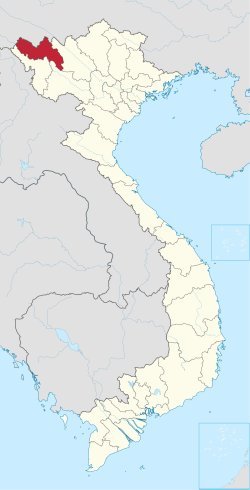
Lai Chau Province, Vietnam
REEx Insight | Vietnam Has Ore. Now It Must Prove the Chemistry.
This is important—but it is not yet a commercial rare-earth separation breakthrough.
The pilot takes Dong Pao ore through flotation and hydrometallurgy to produce a mixed TREO product above 95%. It does not demonstrate commercial production of individually separated neodymium, praseodymium, dysprosium, or terbium oxides, nor metals, alloys, or magnets.
That distinction matters. China's advantage lies not simply in possessing rare earths, but in efficiently moving material through separation, refining, metallization, and magnet manufacturing. For the United States, Europe, Japan, and South Korea, Vietnam could eventually become an important alternative supply-chain node. But Dong Pao's real test is economics: Can Vietnam repeatedly process complex ore at industrial scale, control radioactive and other impurities, achieve strong recoveries, and produce material cheaply enough to compete?
This pilot starts answering that question.
100 Tonnes to Test a Much Bigger Ambition
Vietnamese Patent No. 33663 covers two principal stages: flotation to concentrate the ore, followed by hydrometallurgical processing to produce mixed rare-earth oxide. The closed-loop design recycles water and seeks to recover barite, fluorite, and sodium hexafluorosilicate as additional products or by-products.
The operation will be monitored by cameras and 33 technical, environmental, and radiation-safety KPIs. The resulting material cannot be sold or given away; it is strictly for testing and process development.
That makes this a technology-validation program, not the reopening of Dong Pao as a commercial mine.
The Bigger Dong Pao Story
The timing is particularly interesting because Dong Pao is attracting broader Asian supply-chain attention. Recent Vietnam-South Korea research targets beneficiation, leaching, and ultimately magnet-material feedstocks. The pieces suggest a longer-term ambition extending beyond mining toward processing.
REEx Bottom Line: Vietnam is not challenging China's downstream dominance yet. But it is beginning to build something more important than another resource estimate: domestic processing know-how. If this technology successfully scales from 100 tonnes to commercial production—and eventually from mixed oxide to separated magnet rare earths—Dong Pao becomes substantially more strategically important.
REEx Connect
| Organization | Key Contact / Role | Strategic Relevance |
|---|---|---|
| Hanoi People's Committee | Truong Viet Dung, Vice Chairman | Signed the pilot authorization |
| Mining Technology and Construction Consultancy JSC | Project technical team | Operator of the semi-industrial pilot |
| Hanoi Department of Science and Technology | Supervisory authority | Technical, environmental, and regulatory oversight |
| Dong Pao Rare-Earth Mine | Lai Chau Province | Source of the pilot ore |
| Korea Institute of Geoscience and Mineral Resources | Rare-earth research team | Separate Korea-Vietnam Dong Pao processing collaboration |
| Government of Vietnam | Relevant ministries and agencies | Controls broader rare-earth mining and processing policy |
Source note: The project is confirmed by the Hanoi government's official information portal as well as Vietnam Investment Review and Tuoi Tre News. The pilot's stated objectives are technological validation and assessment of industrial-scale potential; they should not be interpreted as evidence that commercial-scale production has already been demonstrated.


0 Comments
No replies yet
Loading new replies...
Moderator
Join the full discussion at the Rare Earth Exchanges Forum →