
Highlights
- HUMG will host GIS-IDEAS 2026 in Hanoi from September 24–27, uniting Vietnamese, Japanese and regional researchers in geospatial science and Earth sciences.
- Hanoi has authorized an 18-month controlled pilot using up to 100 tonnes of Dong Pao ore to test production of mixed TREO above 95% purity.
- The pilot's rated throughput is 100 kg of run-of-mine ore per hour, but mixed TREO is not the same as separated high-purity oxides like neodymium or dysprosium.
- Vietnam must still demonstrate recovery, repeatability, environmental controls and downstream separation before it can offer economically competitive ex-China rare-earth products.
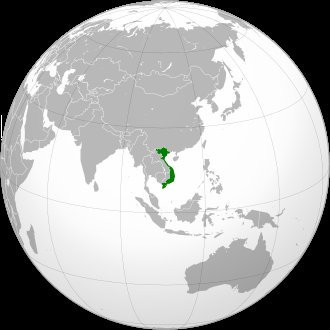
Vietnam's rare-earth ambitions are moving from maps toward metallurgy. From September 24–27, Hanoi University of Mining and Geology (HUMG (opens in a new tab)) will host GIS-IDEAS 2026, (opens in a new tab) bringing Vietnamese, Japanese and other regional researchers together around geographic information systems (GIS), remote sensing and Earth sciences. The timing is striking: Hanoi has authorized an 18-month controlled pilot using up to 100 tonnes of Dong Pao ore to test production of total rare-earth oxide (TREO) above 95% purity. Together, the conference and pilot highlight two pieces of the same challenge—understanding the resource underground and determining whether it can be processed reliably above ground.
REEx Insight | From Pixels to Processing
Rare-earth supply chains begin long before separation. Geological mapping, remote sensing, resource modeling and mineral characterization help determine where capital should—or should not—go.
Conference chair and HUMG President Prof. Dr. Tran Thanh Hai (opens in a new tab) brings nearly four decades of geological experience spanning mapping, tectonics, structural controls on mineral deposits and natural-resource management.
But better geological intelligence cannot solve metallurgy.
Dong Pao Meets the Laboratory
The Hanoi pilot's rated throughput is 100 kg of run-of-mine ore per hour, with 100 tonnes permitted overall—the equivalent of roughly 1,000 theoretical hours at continuous nameplate throughput.
Critically, >95% mixed TREO is not separated 99.9% neodymium, praseodymium, dysprosium or terbium oxide. Vietnam must still demonstrate recovery, repeatability, economics, environmental controls and ultimately downstream separation.
GIS-IDEAS nevertheless arrives as Vietnam strengthens the scientific ecosystem around these problems.
The conference is organized by HUMG, Osaka Metropolitan University, AGILE and the Vietnam National Space Center, with workshops, technical sessions and field activities. GIS-IDEAS 2026 (opens in a new tab)
REEx takeaway: Vietnam has significant rare-earth geological potential. The real contest is converting that potential into economically competitive, qualified ex-China products.
REEx Connect
| Organization / Person | Role |
|---|---|
| Hanoi University of Mining and Geology (HUMG) | GIS-IDEAS host; mining, geology and geospatial research |
| Prof. Dr. Tran Thanh Hai | HUMG President; GIS-IDEAS Conference Chair |
| Mining Technology and Construction Consultancy JSC | Operator of Hanoi's controlled TREO pilot |
| Lê Văn Tuấn | Chairman/legal representative of pilot company |
| Lai Chau VIMICO Rare Earth JSC | Dong Pao project/company associated with the deposit |
| Osaka Metropolitan University | GIS-IDEAS organizer |
| Vietnam National Space Center | GIS-IDEAS organizer; remote-sensing/geospatial capabilities |
| AGILE | GIS-IDEAS organizing partner |


0 Comments
No replies yet
Loading new replies...
Moderator
Join the full discussion at the Rare Earth Exchanges Forum →