
Highlights
- Over 5,000 samples from the Ávila Fiscal Mining Reserve in Pedernales support a resource estimate expected in November 2026, with reserves targeted for H1 2027.
- A new U.S.-Dominican critical-minerals framework extends beyond extraction into separation and processing, with potential loans, equity, offtakes and insurance.
- The EU and University of Barcelona are co-funding a €538,709 characterization program covering rare earths, gallium and scandium in Ávila's karst bauxites.
- State mining company EMIDOM, created in 2024, is the key commercial vehicle for managing Ávila and entering contracts with international partners.
- Mineralogy, recoveries, separation flowsheet and economics must still be proven before Ávila transitions from exploration asset to viable mine.
The Dominican Republic expects to quantify its rare-earth resources in November 2026 and declare its first reserves during the first half of 2027 after analyzing more than 5,000 samples from the Ávila Fiscal Mining Reserve in Pedernales (opens in a new tab). The geology remains unproven commercially—but a new U.S.-Dominican critical-minerals framework makes this more than another exploration story.
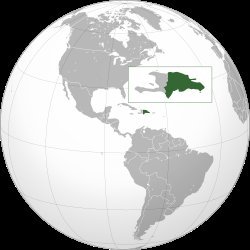
REEx Insight: Washington Is Building the Map Before the Mines
The headline is not yet "Dominican rare-earth reserves." None have been established. More than 5,000 assay results support a coming resource estimate, while metallurgy, economics, logistics and environmental work must determine what portion—if any—becomes economically recoverable reserves. Earlier government discussion of roughly 100 million tonnes therefore remains an estimate awaiting November's technical reckoning. The bigger signal fits REEx's Great Powers Era 2.0™ thesis. Washington is assembling Western Hemisphere optionality before projects become mines. The bilateral framework explicitly reaches beyond extraction into separation and processing, with potential loans, guarantees, equity, offtakes and insurance. That matters because ore without economically viable beneficiation and downstream conversion does little to break China's supply-chain leverage.
Pedernales Moves From Promise Toward Proof
The Ávila project targets rare earths associated with karst bauxite deposits and is being explored using Canada's NI 43-101 framework. The European Union has separately agreed to support characterization work covering rare earths, gallium and scandium—giving Pedernales strategic attention from both sides of the Atlantic. The timing is striking. USA Rare Earth just completed its combination with Brazil's Serra Verde, while Washington is expanding critical-mineral partnerships across Latin America.
Investor checkpoint: November's resource estimate matters. But mineralogy, recoveries, separation flowsheet, capex and economics will determine whether Pedernales becomes a mine—or remains an impressive collection of assays.
REEx Connect — Ávila Rare Earth Project Stakeholder Map
| Stakeholder | Key leadership / contact | Role / interest in Ávila |
|---|---|---|
| Dominican Republic / Presidency | President Luis Abinader | Ultimate sovereign stakeholder. Ávila was established as a Fiscal Mining Reserve under Decree 430-18. The decree contemplates development directly by the state through special contracts. |
| Ministry of Energy and Mines (MEM) (opens in a new tab) | Minister Joel Santos Echavarría | Lead ministry overseeing development of the rare-earth initiative and U.S. critical-minerals cooperation. MEM coordinates exploration/evaluation through the mining and geological agencies. |
| Empresa Minera Dominicana (EMIDOM) | Executive Vice President Miguel Ángel Díaz | Probably the most important commercial stakeholder to watch. Created by Decree 453-24, EMIDOM is the state mining company charged with managing fiscal mining reserves including Ávila and entering contracts/alliances with international companies. |
| Dirección General de Minería (DGM) | Director General Rolando Muñoz | Dominican mining regulator/technical authority participating directly in the Ávila program. Decree 430-18 specifically gives DGM a role in the cadastral and deposit-evaluation work. |
| Servicio Geológico Nacional (SGN) | Director Edwin García Coco | Geological and technical arm involved in exploration, mapping and resource characterization. It is expressly named alongside DGM under the Ávila framework. |
| United States Government | Critical-minerals cooperation; U.S. Embassy economic team includes Ali Nadir and Ariel Jahner | Strategic partner. The new framework contemplates mobilizing public/private financing and supporting extraction, separation and processing—but importantly, the framework itself creates no legally enforceable rights or obligations. |
| European Union | EU Ambassador Raúl Fuentes Milani | Technical/strategic partner. The EU, Dominican government and University of Barcelona are funding a €538,709.50 characterization program covering REEs, gallium and scandium in Ávila's karst bauxites. |
| University of Barcelona | Research partner | Participating in the EU-backed mineralogical characterization, specialized analysis and knowledge-transfer program. |
| Pedernales Province / local stakeholders | Governor Edirda de Óleo; municipality and surrounding communities | Local environmental, social and economic stakeholders. Historic bauxite revenues from Las Mercedes were allocated partly to the Pedernales development trust and municipality. |
| Historical bauxite operators | Alcoa Exploration Company; DOVEMCO; Sierra Bauxita Dominicana; Nova Mining; Lecanto Materials | Important historical chain-of-title/context, but I would not describe them as current Ávila rare-earth rights holders. Alcoa relinquished its bauxite concession in 1984; subsequent arrangements concerned bauxite extraction/purchase at Las Mercedes. |


0 Comments
No replies yet
Loading new replies...
Moderator
Join the full discussion at the Rare Earth Exchanges Forum →