
Highlights
- DFARS restrictions take full effect January 1, 2027, banning NdFeB magnet supply chains tied to China, Russia, Iran, or North Korea.
- Pea Ridge Mine holds proven tailings reserves with 18% heavy REE content, including projected annual output of 35 tonnes of terbium and 190 tonnes of dysprosium.
- Caldera Holdings holds active mining and water permits plus licensed separation technology from Saskatchewan Research Council, yet federal financing has not materialized.
- Phase One combines legacy tailings reclamation with strategic mineral recovery, offering a fast-start path to domestic heavy rare earth supply.
- REEx warns that DFARS nonavailability waivers can only delay the problem—only domestic mining and separation can close the supply gap.
The clock is running. On January 1, 2027, one of America's most consequential defense-supply-chain rules takes effect. For covered NdFeB magnets, the Defense Federal Acquisition Regulation Supplement (DFARS) rule extends the restriction across the entire supply chain—from mining neodymium, iron and boron through production of the finished magnet when those activities occur in China, Russia, Iran or North Korea, subject to specified exceptions and nonavailability determinations.
Pea Ridge Mine, Missouri
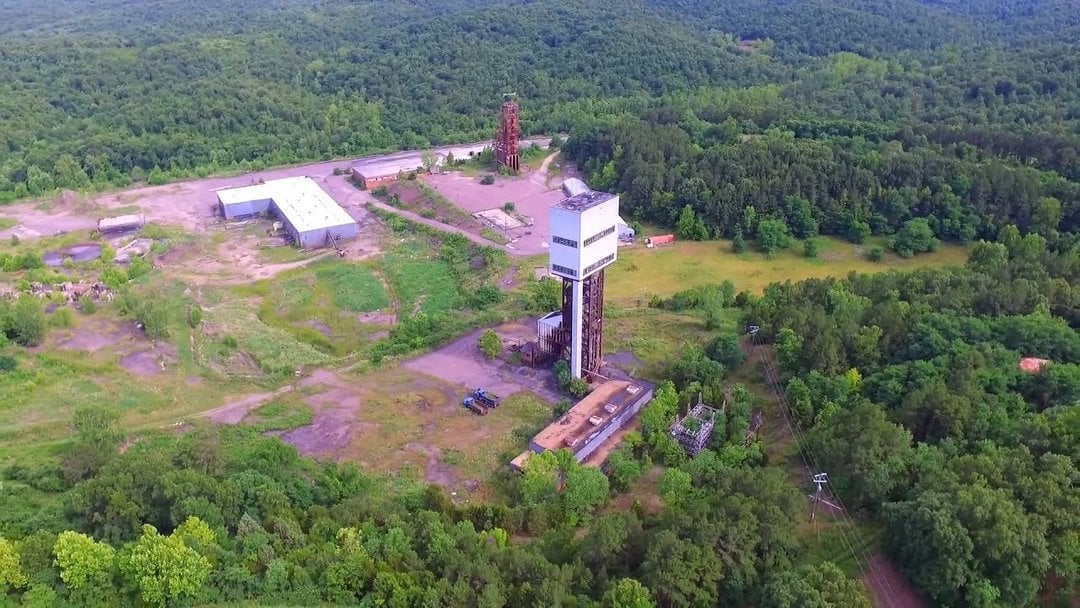
Yet America remains acutely exposed at another critical point in the magnet chain: dysprosium and terbium, heavy rare earths used to maintain coercivity and performance in demanding high-temperature NdFeB applications. Washington does not need another conference explaining the problem. It needs to start activating resources already sitting on American soil. Pea Ridge (opens in a new tab), Missouri should be near the front of that line.
This isn't simply another speculative exploration property. The US Geological Survey (USGS) has studied Pea Ridge and documented significant rare-earth mineralization. Caldera Holdings LLC (opens in a new tab) has established proven reserves under SK-1300 equivalent reporting of its 24 million tonnes of legacy surface tailings with magnetite, phosphate, and all 16 rare earths — including heavy REEs running at 18%. Caldera has established proven recovery, concentration and SX ready TREO by three independent labs. The company reports secured ownership of commercially scaling separation technology for all 16 rare earth elements via Saskatchewan Research Council (SRC). Caldera also holds an active mining and water permit.
That makes the Caldera Pea Ridge mine particularly compelling. Phase One is essentially resource recovery married to mine reclamation: process material already mined decades ago, recover strategic minerals once discarded as waste, remediate a legacy mining site, and use the resulting feedstock to help establish a domestic critical-minerals supply chain.
And as REEx has chronicled several times now, Pea Ridge isn't another light-rare-earth story. Caldera reports meaningful Tb and Dy concentrations. Its current Phase One projections include approximately 35 tonnes of Tb and 190 tonnes of Dy annually, plus Ho and substantial Nd and Pr production. Those remain company projections that must be demonstrated at commercial scale, but the potential is extraordinary. Caldera continues to discuss financing options, the permits are ready, and the reclamation effort could start fast. Yet the federal government has yet to support the project.
REEx reminds all in the federal government that doing nothing is also a decision. Diplomatic reprieves and DFARS nonavailability determinations can buy time. They cannot mine a kilogram of dysprosium, separate a kilogram of terbium, or manufacture a single additional American magnet.
Congress created these sourcing restrictions because dependence on geopolitical competitors became a national-security vulnerability.
So the right thing to do is to accelerate Pea Ridge. Finance it. Calls with the founder confirm readiness for auditable mine-to-magnet traceability per the DFARS rules. Connect Missouri feedstock to American and allied separation, metals, alloys and magnet manufacturing. America has spent years identifying the rare-earth problem. The resources are available. There is a deadline. Now build.
Pea Ridge Mine: Missouri's Heavy Rare Earth Asset
Located in Washington County near Sullivan, Missouri, Pea Ridge is a former high-grade underground iron mine being redeveloped by Caldera Holding LLC, led by Chairman/owner James Kennedy and CEO Andrew Squires, as an integrated U.S. rare-earth and critical-minerals project. Unlike most American rare-earth deposits dominated by light rare earths, Pea Ridge contains significant reported concentrations of dysprosium (Dy), terbium (Tb) and holmium (Ho), alongside neodymium and praseodymium—making it potentially important to high-coercivity, high-temperature NdFeB magnets used in defense, aerospace, automotive and industrial systems. Caldera reports approximately 700,000 tons of contained REEs across three underground deposits, plus roughly 130,000 tons of REEs in legacy tailings accumulated during about 40 years of iron mining; these remain company-reported resource figures rather than current commercial production.
The project's near-term appeal is particularly unusual: Caldera proposes recovering rare earths, magnetite, phosphate, yttrium and other valuable materials from previously mined tailings, effectively combining mine reclamation with strategic-mineral production. The property is described by Caldera as a permitted mining operation, and again the company holds licensing access to separation technology developed by SRC. Follow the link for more details. (opens in a new tab)


0 Comments
No replies yet
Loading new replies...
Moderator
Join the full discussion at the Rare Earth Exchanges Forum →