
Highlights
- The world is shifting from globalization to Great Powers Era 2.0, where critical minerals, energy systems, and industrial control matter more than free trade, with Africa moving from geopolitical periphery to center stage.
- Political scientist Robert Pape argues we're entering a “neo-imperialism” era focused on supply-chain control, fertilizer dependency, and resource nationalism—though some predictions lack supporting evidence.
- Africa's long-term strategic leverage depends less on mining copper, cobalt, lithium, and graphite, and more on developing midstream processing: refining, separation, metallization, and battery manufacturing capacity.
Is the world entering a new era where critical minerals, energy systems, shipping lanes, fertilizer supply, and industrial control matter more than globalization and free trade? Is Africa moving from the geopolitical periphery toward the center of an intensifying struggle over strategic resources? And are AI, electrification, defense technologies, and industrial policy accelerating competition for copper, cobalt, rare earths, uranium, graphite, lithium, and energy infrastructure?
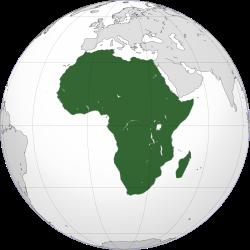
In this Rare Earth Exchanges™ analysis of a recent interview on YouTube (opens in a new tab), political scientist Robert Pape argues that the Iran conflict and broader geopolitical instability may represent the early stages of a more aggressive era of “neo-imperialism.” But where does grounded geopolitical analysis end—and speculation begin? Are warnings about supply-chain vulnerability, resource nationalism, and strategic chokepoints increasingly valid? Or do claims involving future assassination campaigns, direct resource seizures, and sweeping assumptions about U.S. geopolitical intent move beyond available evidence?
Most importantly for REEx readers: could Africa’s future strategic power depend less on simply mining resources—and more on whether the continent develops refining, separation, metallization, battery chemistry, and magnet manufacturing capacity? In other words, in Great Powers Era 2.0, will the winners control the mines—or the processing plants?
Africa Is Moving From the Margins to the Map’s Center
The old globalization model assumed cheap shipping, open markets, stable trade routes, and relatively frictionless access to resources. That world is fading. In the interview, Pape argues the global system is shifting toward a harsher era of strategic competition centered on energy, food systems, critical minerals, maritime chokepoints, and industrial control. Africa, he argues, is becoming increasingly important in that contest.
On several points, he is directionally correct.
Rare Earth Exchanges has repeatedly argued that the world is entering Great Powers Era 2.0: a more nationalistic (or could emerge into blocs too), state-driven industrial age where governments increasingly view supply chains not merely as economic tools—but as instruments of geopolitical leverage. The Iran conflict, U.S.-China tensions, Red Sea disruptions, Greenland rhetoric, and growing industrial policy battles all broadly dovetail with that thesis.
The Grain of Truth Beneath the Thunder
Pape’s strongest arguments involve systemic supply-chain vulnerability. His warnings about fertilizer dependence, shipping disruptions, food insecurity, and resource nationalism align with observable geopolitical realities. Africa possesses enormous reserves of copper, cobalt, graphite, manganese, uranium, platinum group metals, lithium, and rare earth elements. Great powers increasingly view these not simply as commodities, but as strategic industrial inputs essential for AI infrastructure, defense systems, EVs, robotics, semiconductors, and energy systems.
Where the interview becomes weaker is in its predictive certainty.
Claims implying broad future U.S.-led assassination campaigns, systematic resource seizures, or an imminent continent-wide “neo-imperial” scramble move well beyond evidence presented. The discussion often blurs legitimate structural analysis with speculative geopolitical forecasting lacking hard sourcing or operational evidence.
The Missing Layer: Midstream Power
The interview repeatedly discusses minerals. It barely discusses processing.
That omission matters enormously. Africa’s long-term strategic leverage may depend less on simply extracting raw materials and more on whether nations develop midstream and downstream industrial ecosystems: refining, solvent extraction, metallization, alloying, battery chemistry, rare earth separation, and magnet manufacturing.
This is precisely where REEx’ Great Powers Era 2.0 framework becomes highly relevant.
The next global contest is not simply about who owns the rocks. It is about who controls the industrial ecosystems built around them. The mines matter. But the processing plants may still decide the future.


0 Comments
No replies yet
Loading new replies...
Moderator
Join the full discussion at the Rare Earth Exchanges Forum →