
Highlights
- CREIA President Li Wei acknowledged overcapacity, high-end supply gaps, and compliance shortfalls in China's permanent-magnet sector at a September 2026 Hefei meeting.
- China's state-directed model drives massive magnet output but simultaneously produces too much at the commodity level while falling short at the technological frontier.
- Technical presentations covered advanced permanent magnets, short-process recycling, light rare-earth applications, and strategic use of medium and heavy rare earths.
- No new investments or offtake deals were announced; the significance lies in China's unusually candid self-diagnosis of its magnet industry weaknesses.
- Western policymakers are urged to build economically sustainable supply chains rather than replicate China's capacity-race approach.
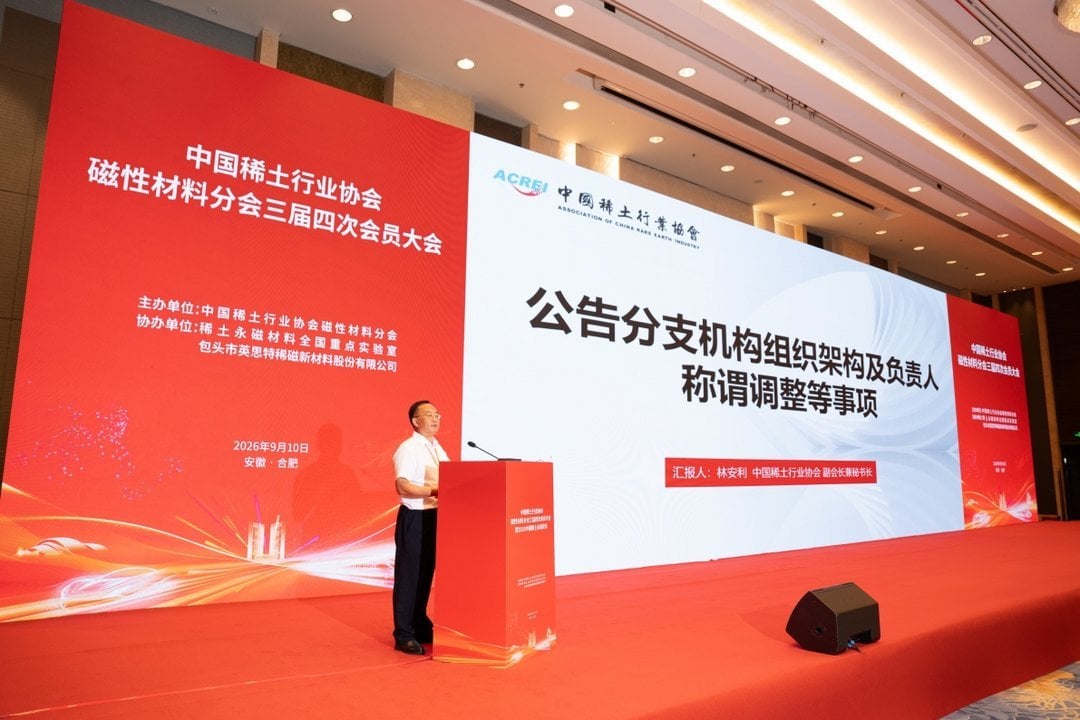
China's rare-earth industry establishment has publicly acknowledged an important contradiction in its permanent-magnet sector: excess capacity overall, but inadequate supply of some high-end specialty magnetic materials. This was at a September 10 meeting in Hefei. Specifically, the Magnetic Materials Branch of the China Rare Earth Industry Association (CREIA) gathered magnet producers, metals and alloys companies, researchers, and downstream users. Industry leaders emphasized advanced magnets, recycling, light and heavy rare-earth applications, compliance, and tighter coordination across the supply chain.
China Rare Earth Industry Association officials convene the Magnetic Materials Branch meeting in Hefei, Anhui, on September 10, 2026. The gathering brought together China's rare-earth magnet industry as association leaders acknowledged overcapacity, shortages in some high-end specialty magnetic materials, and compliance challenges while emphasizing technology, recycling, and greater supply-chain coordination. Source: China Rare Earth Industry Association.
REEx Insight | China's Rare-Earth Paradox Comes Into View
For Rare Earth Exchanges®, the most revealing disclosure came from CREIA President and Chinese Academy of Engineering academician Li Wei: China's magnet industry faces overcapacity, shortcomings in high-end specialty magnet supply, and insufficient compliance awareness among some companies.
These problems mirror a theme REEx has followed across China's broader economy: massive industrial scale does not necessarily equal economic efficiency.
China's state-directed model can mobilize capital, infrastructure, and production astonishingly quickly. But top-down industrial priorities can also encourage provinces, state enterprises, and private companies to pursue similar favored sectors simultaneously. The result can be duplicated investment, excess capacity, price wars, and squeezed margins—the phenomenon Beijing itself is attempting to combat through its “anti-involution” campaign.
Rare-earth magnets now display elements of the same tension.
The contradiction is striking: China can dominate global magnet manufacturing while simultaneously producing too much at the lower end and not enough of certain sophisticated products at the technological frontier.
There is a second REEx concern. Under Xi Jinping, strategic industries increasingly operate inside a system where industrial policy, national security, export controls, and commercial decision-making overlap. That gives Beijing extraordinary ability to coordinate resources—but can reduce predictability and flexibility for individual businesses. Recent export-control implementation illustrates the tension: Chinese suppliers have reportedly held back some U.S. shipments amid uncertainty over geopolitical and regulatory consequences.
This is the Great Powers Era 2.0™ paradox: China's centralized system can be exceptionally powerful at building strategic capacity, yet the same system can generate rigidity, duplication, and distorted commercial incentives.
For Western policymakers, the lesson is not to copy China's capacity race. Build economically sustainable, technologically advanced supply chains capable of surviving without permanent state direction.
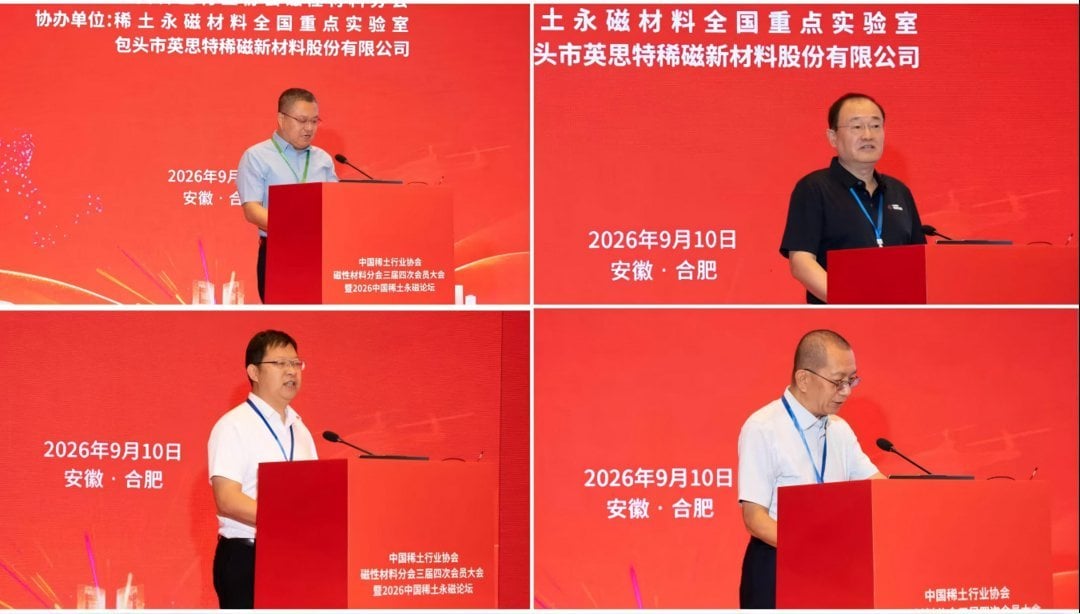
Presentations examined advances in rare-earth permanent magnets, short-process magnet recycling, expanded applications for light rare earths, and the strategic use of China's medium and heavy rare-earth resources—highlighting Beijing's continuing push to move its dominant rare-earth industry toward higher-value materials, recycling, and advanced applications. Source: China Rare Earth Industry Association.
Beyond More Magnets
The technical agenda reinforces that interpretation. Zhu Minggang of the China Iron & Steel Research Institute addressed advanced permanent-magnet technology. Yue Ming of Beijing University of Technology presented short-process recycling technologies.
Lian Hua of China Northern Rare Earth examined expanding light rare-earth applications, while Zhang Tong of China Rare Earth Group Innovation Technology focused on China's strategic advantages in medium and heavy rare earths.
No new mine, plant, investment, or offtake was announced. The business news is China's unusually candid diagnosis of its own magnet industry's weaknesses—and the technologies it is targeting to correct them.
REEx Connect
| Organization / Contact | Strategic Relevance |
|---|---|
| China Rare Earth Industry Association | National rare-earth industry organization |
| Li Wei | CREIA President; Chinese Academy of Engineering academician |
| Magnetic Materials Branch, CREIA | Permanent-magnet industry branch |
| Lin Anli | Chairman, Magnetic Materials Branch |
| Hu Boping | Executive Deputy Chairman |
| China Iron & Steel Research Institute | Advanced magnet research |
| Zhu Minggang | Professor; permanent-magnet technology |
| Beijing University of Technology | Magnet recycling research |
| Yue Ming | Professor; short-process recycling |
| China Northern Rare Earth (Group) High-Tech | Major light rare-earth producer |
| Lian Hua | Deputy General Manager |
| China Rare Earth Group Innovation Technology | CREG technology subsidiary |
| Zhang Tong | Deputy General Manager; medium/heavy rare-earth applications |
Source Disclaimer: This news item originates from the China Rare Earth Industry Association, which operates within China's state-directed rare-earth industrial ecosystem. Its characterization of industry conditions, technological progress, and policy objectives should be independently verified. REEx analysis concerning Chinese economic policy and governance represents REEx's interpretation rather than statements made by CREIA.


0 Comments
No replies yet
Loading new replies...
Moderator
Join the full discussion at the Rare Earth Exchanges Forum →