
Highlights
- China Rare Earth Group and the Chinese Academy of Geological Sciences launched the Panxi Rare Earth Industry High-Quality Development Research Base in Xichang, Sichuan.
- Seven Chinese Academy of Engineering academicians attended alongside representatives from China's Ministry of Natural Resources and China Geological Survey, signaling strong government backing.
- The initiative aims to convert Panxi's geological resource advantage—centered on the Maoniuping bastnäsite deposit—into technological and industrial strength for China's NdPr magnet supply chain.
- No new mineral discovery, production target, or processing breakthrough was announced; the significance lies in institutional capacity building and research-industry coordination.
- Western policymakers are urged to note that China's rare-earth dominance stems from linking geology, mining, processing, research, and policy—a model the Panxi base is designed to deepen.
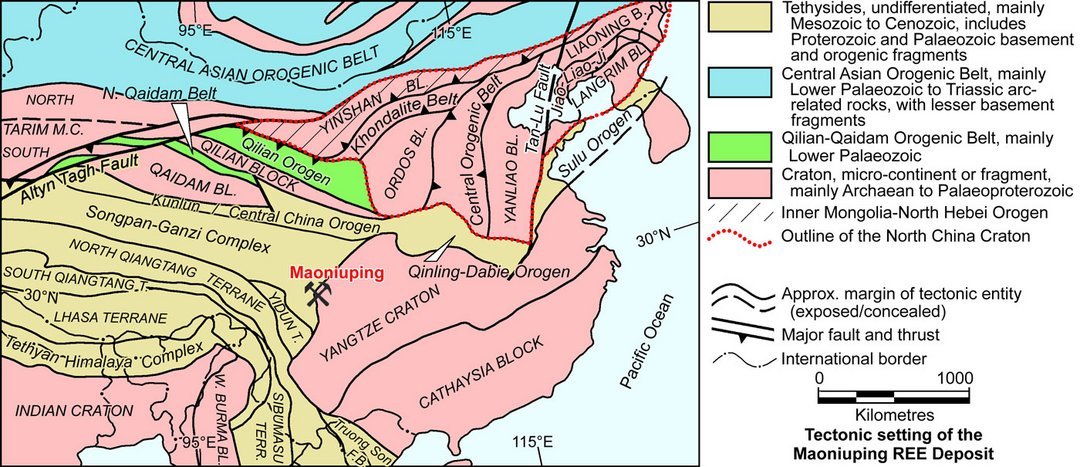
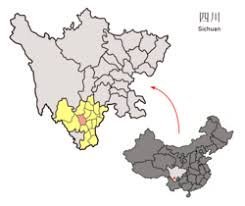
China Rare Earth Group and the Chinese Academy of Geological Sciences have launched the Panxi Rare Earth Industry High-Quality Development Research Base in Xichang, Sichuan, marking the 40th anniversary of the discovery of the Maoniuping rare earth deposit (opens in a new tab). The August 4 gathering brought together seven members of the Chinese Academy of Engineering, central government agencies, geological institutes, universities, and industry representatives. While no new mineral discovery, production target, or processing breakthrough was announced, the business significance lies elsewhere: Beijing is institutionalizing research and industrial coordination around one of China’s most important rare-earth resource regions, with an explicit goal of converting geological resources into technology and industrial advantage.
Source: PorterGeo
REEx Insight | China Is Organizing the Brainpower Around the Ore
For Western policymakers, Panxi deserves attention for more than what lies underground.
China’s rare-earth advantage was built by connecting geology, mining, processing, research, manufacturing, and government policy. The new Panxi base appears designed to deepen precisely that model by linking research institutes, universities, state-owned enterprises, and government agencies around Sichuan’s resource base.
That is especially relevant because Maoniuping is a major bastnäsite rare-earth deposit dominated by light rare earths, making it strategically important to China’s NdPr-oriented magnet supply chain.
The announcement therefore represents institutional capacity building rather than a technical breakthrough. Yet in the Great Powers Era 2.0™, institutional coordination can ultimately determine how quickly scientific work becomes qualified industrial production.
Seven Academicians Signal Beijing’s Intent
The meeting was unusually heavyweight. Chinese Academy of Engineering academicians Duo Ji, Mao Jingwen, Wang Yunmin, Shen Zhengchang, Sun Youhong, Tang Juxing, and Xiong Shengqing attended alongside representatives from China’s Ministry of Natural Resources, China Geological Survey, and China Nonferrous Metals Industry Association. China Rare Earth Group Deputy General Manager Xie Zhihong described the research base as a shift from “confidence in resources” toward “confidence in technology.” His stated priorities were technical problem-solving, deeper research cooperation, and stronger industrial coordination—essentially building a Panxi model that can connect research, production, and end-use applications.
From Resource Endowment to Industrial Power
The base was formally inaugurated during the meeting, and related cooperation agreements were signed. Participants said the initiative is intended to connect the complete industry-university-research-application chain and establish closer collaboration with China’s leading scientific institutions.
The declared destination is ambitious: help transform Panxi’s resource advantage into technological and industrial advantages while laying the foundation for a “world-class rare earth industrial base.”
For Western competitors, that ambition—not the ceremony—is the news.
REEx Connect
China Rare Earth Group Co., Ltd. — State-owned rare-earth conglomerate and co-organizer.
Chinese Academy of Geological Sciences, Institute of Mineral Resources — Research-base partner.
China Rare Earth (Liangshan) Co., Ltd. — Local organizer in Sichuan.
Ministry of Natural Resources / China Geological Survey — National government and geological agencies represented.
Xie Zhihong — Deputy General Manager, China Rare Earth Group.
Source Disclaimer: This report originates from China Rare Earth Group, a Chinese state-owned enterprise. Claims regarding the research base, expected industrial benefits, and strategic outcomes should be independently verified. The announcement provides no new reserve estimate, production target, capital commitment, or demonstrated technological breakthrough.


0 Comments
No replies yet
Loading new replies...
Moderator
Join the full discussion at the Rare Earth Exchanges Forum →