
Highlights
- India's parliament demands restored funding of ₹118.18 crore for uranium and rare metals exploration to prevent supply shortages in the next decade.
- Exploration faces an 8–12 year lag between discovery and production, requiring immediate investment despite short-term policy pressures.
- While exploration funding is necessary, India still lacks downstream processing capabilities and remains dependent on external refining, particularly from China.
India’s parliament has delivered a blunt message: invest now in uranium and rare metals—or face a supply crisis a decade from today. In simple terms, lawmakers want more funding for exploration to secure future nuclear fuel and critical mineral supply, warning that today’s budget cuts could become tomorrow’s shortages.
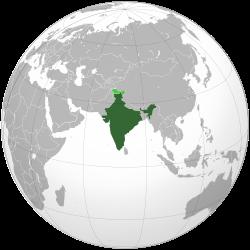
The Long Game Beneath the Ground
Exploration is slow, expensive, and unforgiving. The committee notes an 8–12 year lag between discovery and production—an uncomfortable truth in a world addicted to short-term policy cycles.
The call to restore ₹118.18 crore ($14-15m USD) n funding for the Atomic Minerals Directorate for Exploration and Research (opens in a new tab) (AMDER) is not dramatic in scale—but it is strategic in signal. It reflects a growing awareness: critical minerals security begins long before the mine.
Where the Logic Holds Firm
The core argument is sound. Underinvestment in exploration today creates structural shortages tomorrow. This is especially true for uranium, where supply chains are tightly linked to national energy security. India’s recognition of rare metals alongside uranium is also notable. It signals a broader awakening to the role of critical minerals in defense, energy, and industrial policy.
The Quiet Gaps in the Story
Yet the narrative via BuinessLine (opens in a new tab) stops at the first mile.
Exploration alone does not build a supply chain. The real bottleneck lies downstream—in separation, refining, and magnet manufacturing. India, like many nations, remains heavily dependent on external processing, particularly China.
There is also no clarity on which “rare metals” are being prioritized—an omission that matters for investors seeking specificity.
Why This Matters Now
This is not about geology. It is about timing.
India is moving earlier in the value chain than many Western peers—but still risks repeating a familiar pattern: discovering resources without building the industrial backbone to process them.
A necessary step—but far from sufficient. In rare earths, exploration starts the race. Processing decides the winner.


0 Comments
No replies yet
Loading new replies...
Moderator
Join the full discussion at the Rare Earth Exchanges Forum →