
Highlights
- Harena Rare Earths' Ampasindava ionic clay project completed a pre-feasibility study outlining 4,000 tonnes of rare earth oxides annually over a 20-year operation.
- The U.S. DFC committed up to $4.84 million for permitting and pilot processing, reflecting Washington's push to diversify rare earth supply away from China.
- Madagascar reopened most mining permits in January 2026 after a 16-year moratorium, signaling renewed openness to mining investment.
- The country still lacks rare earth separation, metal making, and magnet manufacturing, meaning Ampasindava's output will require downstream processing abroad.
- Governance risks persist following a 2025 military takeover, EITI enhanced scrutiny, infrastructure vulnerabilities, and environmental disputes at Rio Tinto's QMM operation.
Madagascar's 2025 IGF country profile (opens in a new tab) correctly identified the island as an emerging source of critical minerals, but developments in 2026 show the story has evolved. The country has become strategically more important to Western supply chain diversification—but it remains far from becoming a complete rare earth industrial hub. The biggest change is Harena Rare Earths' Ampasindava ionic clay project. In January 2026, the company completed a pre-feasibility study outlining a 20-year operation capable of producing roughly 4,000 tonnes annually of contained rare earth oxides, including about 1,700 tonnes of magnet rare earth oxides. Importantly, the project would initially produce a mixed rare earth carbonate, not separated oxides, metals, or magnets. In July, the U.S. International Development Finance Corporation (DFC) committed up to $4.84 million to fund permitting, environmental studies, and pilot processing, marking Washington's latest investment in diversifying rare earth supply away from China.
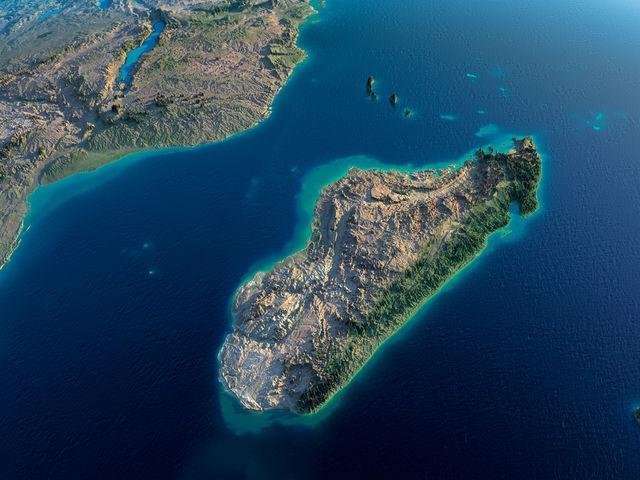
Madagascar also reopened most mining permits in January 2026 after a 16-year moratorium, signaling renewed interest in attracting mining investment. Beyond rare earths, the country remains a significant producer of nickel, cobalt, graphite, ilmenite, zircon, and mica. NextSource continues expanding its Molo graphite operation, while Rio Tinto's QIT Madagascar Minerals (opens in a new tab) (QMM) remains an important producer of ilmenite and monazite—a rare-earth-bearing mineral.
Yet the investment thesis has not fundamentally changed.
Madagascar still lacks domestic rare earth separation, metal making, alloy production, and magnet manufacturing. Ampasindava's product will require downstream processing abroad, with the company evaluating partners in the United States and Europe. In other words, Madagascar strengthens the upstream portion of the Western supply chain but does not solve the midstream bottleneck.
Operational risks also remain significant. The World Bank approved $200 million for transportation upgrades and $250 million to improve electricity reliability, underscoring that weak logistics and unreliable power remain major constraints. Cyclone Gezani disrupted Ambatovy's nickel-cobalt operations earlier this year, illustrating the country's infrastructure vulnerability.
Governance also continues to weigh on investment. Following the October 2025 military takeover, Madagascar remains under EITI enhanced scrutiny through late 2026. Meanwhile, environmental disputes surrounding Rio Tinto's QMM operation—including allegations related to monazite handling and water quality—highlight that community acceptance and regulatory credibility remain material investment risks.
Rare Earth Exchanges® notes Madagascar's geology is becoming increasingly strategic. But in the Great Powers Era 2.0™—our macro investment thesis—the winners will not simply own mineral deposits—they will build resilient infrastructure, trusted governance, and integrated processing capacity. Madagascar has advanced meaningfully since the 2025 IGF profile, yet the decisive question remains unchanged: can it move beyond exporting mineral concentrates to become part of a secure Western mine-to-magnet supply chain?
Reference
Intergovernmental Forum on Mining, Minerals, Metals and Sustainable Development (IGF). Madagascar Country Profile. 2025. Available at: IGF Madagascar Country Profile (PDF) (opens in a new tab)


0 Comments
No replies yet
Loading new replies...
Moderator
Join the full discussion at the Rare Earth Exchanges Forum →