
Highlights
- Odisha is one of four states selected for India's Rare Earth Corridor under the 2026–27 budget, targeting integrated mine-to-magnet manufacturing.
- IREL's Orissa Sands Complex at Chatrapur has operated since 1986 and can produce roughly 11,000 tonnes per year of rare-earth concentrate.
- India approved a ₹72.8 billion permanent-magnet manufacturing scheme targeting 6,000 tonnes per year of integrated capacity with capital subsidies.
- A Joint Working Group was still formulating corridor guidance as of April, highlighting the gap between policy ambition and commercial readiness.
- The real challenge for India is building competitive separation, metals, alloys, and magnet capacity—not simply producing more mineral concentrate.
India does not want to remain a supplier of mineral sand while others capture the magnet margin. Odisha is one of four states selected for a Rare Earth Corridor under India's 2026–27 budget, alongside Kerala, Andhra Pradesh and Tamil Nadu. The corridor is intended to connect mining, processing, research and manufacturing. Odisha TV gets the broad direction right—but the real story is that Odisha already has rare-earth infrastructure, and India is now trying to push much further downstream.
State of Odisha
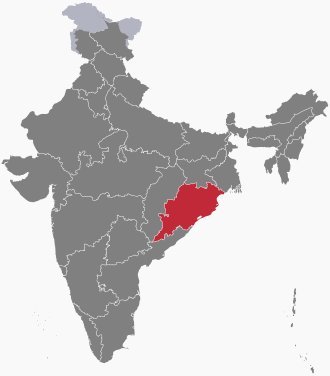
REEx Insight | Odisha Starts With More Than a Map
This is not a greenfield policy concept. IREL, India's state-owned rare-earth company, has operated the Orissa Sands Complex at Chatrapur (opens in a new tab) since 1986 and says its Odisha Rare Earths Extraction Plant (opens in a new tab) can produce roughly 11,000 tonnes per year of rare-earth concentrate as RE chloride, as reported via OdishaTV (opens in a new tab). High-purity oxide refining occurs downstream at IREL's Aluva operation in Kerala. That matters because the corridor is not simply about finding more ore. India's larger challenge is building separation, metals, alloys and magnets at competitive scale.
The Magnet Ambition Gets Serious
New Delhi approved a ₹72.8 billion rare-earth permanent-magnet manufacturing scheme targeting 6,000 tonnes per year of integrated capacity, backed by sales incentives and capital subsidies. India also operates a small 3-tpa SmCo magnet plant in Andhra Pradesh. But investors should not confuse policy architecture with commercial output. Government guidance for the four corridors was still being formulated through a Joint Working Group in April.
Odisha TV also bundles rare earths with biotech, space and marine initiatives, creating an upbeat development narrative. The rare-earth proposition deserves to be judged separately on feedstock quality, separation economics, technology, capital, qualification and customers.
REEx Connect
- IREL (India) Ltd. — Odisha mining/mineral separation and RE extraction.
- Department of Atomic Energy — Rare Earth Corridor policy.
- Odisha Government — Corridor implementation partner.
The Facility
Orissa Sands Complex (OSCOM) is one of IREL's flagship units, located at Chatrapur in the district of Ganjam, about 150 kilometers from Bhubaneswar, the capital of Odisha. All-weather Gopalpur port is situated beside the OSCOM plant complex. The nearest airport is in Bhubaneswar. Mechanized mining and mineral processing activities are carried out over the mining lease area of 2,464 hectares. The mining operations are expanded to 7.5 million tons per annum of mineral sands to produce 6 lakhs tons of processed minerals, including Ilmenite, Rutile, Zircon, Sillimanite and Garnet.
OSCOM deposit contains an average heavy minerals (HM) grade of 10% to 12% HM in the ore over the entire mineable coastal stretch. Mining is taken up by dredging. Simultaneously, dry-mining activities deploying a Tipper-Excavator combination are also adopted for supplementing the production requirement for the mineral processing plant. The mined-out lands are simultaneously backfilled, surface topography restored, followed by plantation activities. Mining and mineral separation activities are carried out in an environmentally friendly and sustainable manner.
The plant has a well-equipped Technical Services section for research and development and quality assurance for products and services. It is certified for ISO 9001:2015, ISO 14001:2015 and ISO 45001:2018.
REEx assessment: Odisha has genuine industrial foundations. The test is whether India can convert them into qualified magnets—not simply more concentrate.


0 Comments
No replies yet
Loading new replies...
Moderator
Join the full discussion at the Rare Earth Exchanges Forum →