
Highlights
- Malaysia holds an estimated 16.1 million metric tonnes of non-radioactive rare-earth resources, but roughly 70% lies within protected forest reserves.
- A fundamental governance gap exists between state control over land and permits and federal authority over strategic mineral development and exports.
- Dr. Yeoh proposes a dedicated national rare-earth office to coordinate federal agencies, states, industry, and international partners.
- Malaysia's raw rare-earth export ban aims to force domestic value creation but may discourage upstream exploration before processing capacity is built.
- Malaysia is navigating a delicate geopolitical balance, maintaining deep supply-chain ties with China while strengthening partnerships with the US and Europe.
Malaysia may be sitting on one of the most strategically consequential rare-earth opportunities outside China. The harder question is whether the country can organize itself quickly enough to capture it. In the latest Rare Earth Exchanges® (REEx) Podcast (opens in a new tab), Dr. Tricia Yeoh, Director of the Asian Institute for Policy and Engagement at the University of Nottingham Malaysia (opens in a new tab), joins REEx hosts Dustin Olsen and Daniel O’Connor to examine that tension. Malaysia’s Minerals and Geoscience Department has identified an estimated 16.1 million metric tonnes of non-radioactive rare-earth resources, although the estimate requires further verification and considerable prospective mineralization intersects environmentally protected areas. In the podcast, Yeoh notes that roughly 70% of the identified rare-earth potential lies within permanent forest reserves.
Dr. Tricia Yeoh, Director of the Asian Institute for Policy and Engagement at the University of Nottingham Malaysia

The discussion builds on Yeoh’s 2026 ISEAS–Yusof Ishak Institute paper, Ambition Without Alignment: Managing Malaysia’s Rare Earth Value Chain. Her central argument is strikingly simple: Malaysia has the geology and ambition, but its governing institutions are not yet fully aligned. States control land, forests, exploration permits, and royalties, while federal authorities oversee strategic mineral development, imports and exports, and important regulatory functions.
Great Powers Era 2.0™ Comes to Malaysia
For REEx, the timing could hardly be more consequential. Malaysia is rapidly becoming a focal point in Great Powers Era 2.0™—the convergence of economic security, national security, and industrial policy around critical-mineral supply chains.
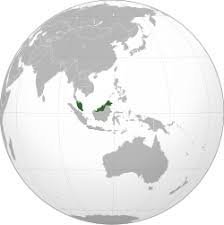
REEx has been tracking this convergence closely. In “Mine to Magnet—or Magnet to Mine?
Malaysia’s Rare Earth Strategy Enters a New Era,” REEx examined Southern Alliance Mining (SGX: QNS) COO Lim Wei Hung’s argument that downstream demand should pull mining and processing capacity upstream. Earlier REEx analysis, “SAM Is the Place To Be: Malaysia’s Rising Rare Earth Player,” examined Southern Alliance Mining’s investment in MCRE Resources and the Gerik ionic-adsorption-clay opportunity. REEx has also identified Southeast Asia—and Malaysia specifically—as an increasingly important prospective heavy-rare-earth theater outside China. The common thread is unmistakable: Malaysia is moving from an underappreciated geological story toward the center of the geopolitical contest for rare-earth supply-chain resilience.
Everyone Wants Malaysia—Malaysia Must Align Itself
Professor Yeoh identifies three major bottlenecks: federal-state coordination, rare-earth potential within protected forests, and Malaysia’s ban on raw rare-earth exports. The export restriction seeks to force value creation into Malaysia, but Yeoh warns that it can simultaneously weaken incentives for upstream exploration before sufficient domestic processing capacity exists. Her proposed solution deserves attention: a dedicated national rare-earth office empowered to coordinate federal agencies, states, industry, and international partners.
The geopolitical message may be even more important. Asked whether Southeast Asia must choose between Washington and Beijing, Yeoh’s answer is essentially “both.” Malaysia’s supply chains are deeply integrated with China, while the United States remains a major export market and strategic partner. Europe is increasingly entering the equation as well. That balancing act may define Malaysia’s rare-earth future.
For investors, the implication is straightforward: Malaysia possesses prospective geology, existing rare-earth processing experience, strategic geography, and rapidly growing international attention. What remains unresolved is institutional alignment, environmental access, and execution. If Kuala Lumpur and the states can bridge those gaps, Malaysia could emerge as one of the most consequential ex-China rare-earth hubs of the coming decade.
Watch the REEx Podcast
Guest: Dr. Tricia Yeoh — Director, Asian Institute for Policy and Engagement, University of Nottingham Malaysia Hosts: Dustin Olsen and Daniel O’Connor — Rare Earth Exchanges Featured research: Ambition Without Alignment: Managing Malaysia’s Rare Earth Value Chain — ISEAS–Yusof Ishak Institute (opens in a new tab) Related REEx coverage: Mine to Magnet—or Magnet to Mine? Malaysia’s Rare Earth Strategy Enters a New Era | SAM Is the Place To Be: Malaysia’s Rising Rare Earth Player | Beyond Brazil? Why Southeast Asia May Become the Next Front in the Rare Earth Supply Chain Race


0 Comments
No replies yet
Loading new replies...
Moderator
Join the full discussion at the Rare Earth Exchanges Forum →