
Highlights
- Shenghe Resources concluded its 2026 Mid-Year Work Conference reporting improved first-half performance and setting five strategic priorities for the remainder of the year.
- Management emphasized market expansion, diversification into non-ferrous metals, compliance, talent development, and disciplined risk management under China's 15th Five-Year Plan.
- The conference signals Shenghe is repositioning for a geopolitically fragmented critical minerals landscape where value chain control matters more than resource ownership.
- The evolving MP Materials-Shenghe relationship illustrates how Western nations are building independent rare earth supply chains, reshaping global partnership dynamics.
- In Great Powers Era 2.0, competitive advantage is shifting from mineral deposit ownership to industrial capability across separation, refining, alloys, magnets, and advanced manufacturing.
Shenghe Resources Holding Co., Ltd., one of China's most internationally active rare earth companies, has concluded its 2026 Mid-Year Work Conference, reporting improved first-half operating performance while outlining priorities for the remainder of the year. Management emphasized market expansion, diversification beyond rare earths into broader non-ferrous metals, compliance, talent development, and disciplined risk management as China enters the first year of its 15th Five-Year Plan.
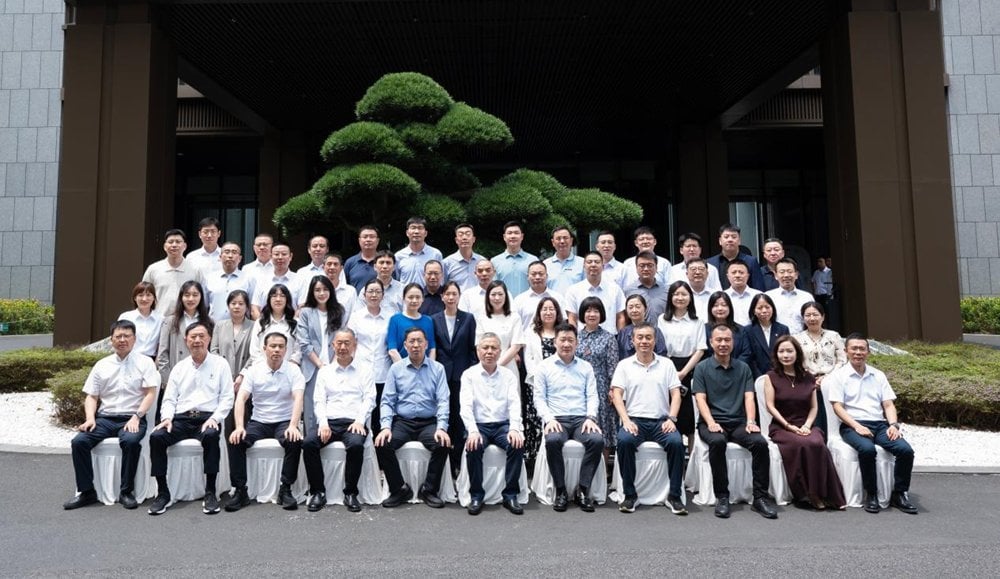
Source: Shenghe Resources
Although the conference announced no major acquisitions or commercial agreements, it provides an important strategic snapshot of how one of China's leading global rare earth companies is preparing for an increasingly competitive and geopolitically fragmented critical minerals landscape.
REEx Insight | Great Powers Era 2.0™ Is Becoming a Race Up the Value Chain
This conference is about far more than Shenghe's quarterly performance. In Great Powers Era 2.0™, competitive advantage is no longer determined simply by owning mineral deposits. Nations and companies are racing to move up the value chain—from mining and concentrate production into separation, metal refining, alloy manufacturing, permanent magnets, advanced components, and ultimately finished products.
Shenghe has long distinguished itself from many Chinese rare earth companies through its international investments, overseas resource partnerships, and global commercial relationships. Its emphasis on market expansion, diversification, compliance, organizational capability, and risk management reflects a company preparing for a world in which supply chains are increasingly shaped by industrial policy, export controls, geopolitical competition, and strategic resource security.
This is not simply corporate planning. It is strategic positioning. For Western governments and investors, the lesson is equally important. The global contest is no longer about securing access to ore. It is about determining who captures the greatest economic value from every successive step of the mine-to-magnet supply chain.
Preparing for a More Competitive Second Half
Chairman Xie Bing credited improved first-half operating performance to stronger management, organizational development, and continued recognition from investors and government stakeholders.
Management identified five priorities for the remainder of 2026:
- Achieve annual operating targets.
- Expand markets while improving coordination across business segments.
- Diversify into additional non-ferrous metals.
- Strengthen management systems and innovation.
- Continue investing in talent development and organizational capability.
General Manager Huang Ping also addressed operational challenges facing individual business units while leading company-wide compliance management initiatives.
Why It Matters
The conference produced no headline acquisition or technology announcement, but it revealed something arguably more important: Shenghe is positioning itself for a world in which the rules of the rare earth industry are being rewritten. In Great Powers Era 2.0, nations are no longer content to export ore and import finished products. From the United States and Australia to Saudi Arabia, India, Brazil, Vietnam, and parts of Africa, governments increasingly want to capture more of the value chain—moving beyond mining into separation, metals, alloys, magnets, components, and advanced manufacturing. That shift directly challenges the globalization model that helped Chinese companies, including Shenghe, expand internationally over the past two decades.
For Shenghe, the strategic question is no longer simply where to secure the next resource. It is how to remain a preferred global partner as host nations demand greater local processing, technology development, skilled workforce creation, and industrial participation. At the same time, Beijing has become increasingly cautious about transferring advanced rare earth processing and magnet technologies abroad, particularly as export controls tighten and critical minerals become instruments of national security.
The changing relationship between MP Materials and Shenghe illustrates this transition. What was once one of the industry's defining international partnerships has evolved dramatically as MP builds an independent, vertically integrated U.S. supply chain with significant support from the U.S. Department of Defense (War) and other domestic stakeholders.
For Western investors, the lesson extends beyond Shenghe. The next phase of competition will not be won by those who simply control mineral resources. It will be won by those that can successfully navigate a world where countries increasingly insist on climbing the value ladder while protecting strategic technologies. The race is shifting from ownership of resources to ownership of industrial capability—and that is the defining competitive dynamic of Great Powers Era 2.0.


0 Comments
No replies yet
Loading new replies...
Moderator
Join the full discussion at the Rare Earth Exchanges Forum →