
Highlights
- Greenland's denial of Energy Transition Minerals' Kvanefjeld license renewal exposes the gap between Western rare earth ambitions and Arctic regulatory reality, citing uranium restrictions that make the project economically unviable.
- The decision highlights a critical lesson for investors: deposits are not supply chains—Western projects continue to stall due to permitting risk, environmental politics, and regulatory volatility while China operates across the full rare earth stack.
- This represents a self-imposed constraint within Western systems where governance, economics, and cultural acceptance—not geology—determine whether strategic mineral projects can proceed, widening the West's dependence on Chinese rare earth supply.
Greenland plans to deny renewal (opens in a new tab) of Energy Transition Minerals’ (opens in a new tab)(ASX: ETM) Kvanefjeld rare earth license, citing uranium restrictions. The move hits one of the West’s largest undeveloped rare earth projects and raises fresh concerns about regulatory risk in critical mineral supply chains—at a time when the U.S. and Europe are trying to reduce dependence on China.
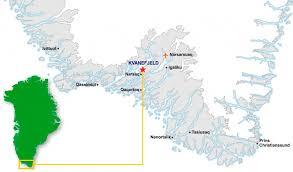
A Project Frozen in Policy Ice
Kvanefjeld was never just another mine. It was a mine-to-refinery vision—rare earths, processing, and geopolitical relevance bundled into one Arctic asset.
Now, Greenland’s decision—rooted in its 2021 uranium ban—is poised to halt progress. The complication is structural: Kvanefjeld’s ore contains uranium as a byproduct. No uranium, no project.
That is accurate. That is also decisive.
The Law Is the Law—But Is It Consistent?
Energy Transition Minerals argues inconsistency: licenses were previously renewed post-legislation. That claim may hold procedurally—but not strategically. Greenland has made its political position clear for years: uranium-linked projects face existential risk. Investors ignoring that signal were not misled—they were optimistic.
The Western Narrative Meets Arctic Reality
Here is where the story sharpens.
Western policymakers often frame Greenland as a future pillar of non-China rare earth supply. That framing is partially valid—but incomplete.
Kvanefjeld exposes the gap:
| Key Points | Rating |
|---|---|
| Resources do exist | ✅ |
| Economical pathway | ? |
| Political license | ❌ |
| Social acceptance | ❌ |
This is not a geology problem. It is a governance, economics, and cultural problem.
Market Reaction: Small Stock, Big Signal
ETM shares fell sharply—unsurprising given the project’s centrality to its valuation. The Spanish approval for a tin-tantalum asset is positive—but strategically secondary. Rare earth optionality drove the narrative. That optionality is now impaired.
REEx Insight: The Illusion of Supply
This is the lesson investors keep relearning:
Deposits are not supply chains.
Kvanefjeld joins a growing list of Western projects stalled not by technology, but by:
- Permitting risk
- Environmental politics
- Regulatory volatility
Meanwhile, China continues to operate across the full stack—mine, separate, refine, magnet.
The Subtext Few Will Say Aloud
There is subtle bias in the original framing—suggesting this is a setback for “the West” versus China.
More precisely, this is a self-imposed constraint within Western systems.
Greenland, part of Denmark, is exercising sovereignty. The consequence is a supply delay.
Bottom Line for REEx Readers
This is not just a project delay—it is a case study in Western supply chain fragility.
Until policy, permitting, and processing align, the West will continue to discover resources it cannot develop.
And China will continue to supply the world.


0 Comments
No replies yet
Loading new replies...
Moderator
Join the full discussion at the Rare Earth Exchanges Forum →