
Highlights
- India will decide foreign investment proposals in rare earth permanent magnet projects from border-sharing countries within 60 days, maintaining oversight while accelerating approvals for this China-dominated strategic sector.
- The policy targets the high-value downstream magnet manufacturing industry, where 80–90% of global production is controlled by China, as India seeks to build domestic capacity beyond its existing mineral resources.
- Fast-tracked approvals alone cannot solve India's structural challenge of building a complete rare earth supply chain from oxide separation to precision magnet fabrication, currently concentrated in China.
India has announced that foreign investment proposals in rare earth permanent magnet projects involving companies from countries sharing land borders with India will be decided within 60 days, according to reporting from ANI News. The policy applies to investments from neighboring nations—including China—whose capital flows into strategic sectors have required government approval since 2020.
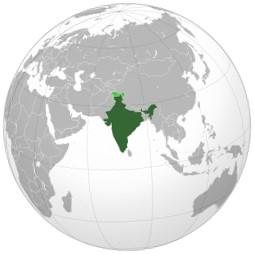
For Rare Earth Exchanges™ readers, the takeaway is straightforward. New Delhi wants to speed decisions on rare earth magnet investments while maintaining strict oversight of foreign participation. The move reflects India’s broader effort to build domestic capacity in a sector dominated globally by China. Permanent magnets sit at the heart of modern technologies—from electric vehicles and wind turbines to robotics and defense systems.
In short, India wants the industry—but not unchecked foreign control.
Magnets: The Real Prize in the Rare Earth Economy
The strategic logic behind the policy is grounded in reality.
Rare earth permanent magnets—especially NdFeB magnets containing neodymium, praseodymium, dysprosium, and terbium—are among the most critical components in the modern technology supply chain. China currently dominates this sector, controlling an estimated 80–90% of global rare earth magnet production and much of the upstream processing that feeds it.
India possesses meaningful rare earth mineral resources, particularly monazite-bearing coastal deposits managed by Indian Rare Earths Limited (opens in a new tab) (IREL). However, the country remains largely absent from the high-value downstream magnet manufacturing industry, where most economic value is created.
Faster investment decisions could help support:
- magnet manufacturing facilities
- rare earth metal and alloy production
- downstream electric motor and component supply chains
But investment approvals alone cannot create a full industry.
The Hard Truth: Supply Chains Are Built, Not Permitted
The 60-day decision window may improve administrative efficiency, but it does not solve the deeper structural challenge. As Rare Earth Exchanges readers are fully aware, rare earth magnet production requires a complex midstream ecosystem, including:
- Rare earth oxide separation
- metallization and alloy production
- sintering and precision magnet fabrication
Today, the vast majority of these capabilities remains concentrated in China.
Even countries with rare earth mining potential struggle to replicate this industrial base. Without reliable access to separated rare earth materials—especially heavy rare earths like dysprosium and terbium—new magnet facilities face supply risks.
In other words, policy speed is helpful, but industrial depth matters far more.
The Geopolitical Subtext
The policy also reflects India’s evolving geopolitical posture.
Following border tensions with China in 2020, India introduced rules requiring government approval for investments from neighboring countries. The new 60-day review timeline appears designed to balance economic openness with national security caution.
The message is clear: India welcomes capital—but intends to retain strategic control over critical technology supply chains.
Why This Matters for Rare Earth Investors
India’s move fits into a broader global trend.
The United States, Japan, the European Union, Australia, and India are all pursuing strategies to diversify rare-earth processing and magnet production away from China. Progress is underway, but remains early.
India’s policy highlights a growing realization across governments and markets: the strategic leverage in rare earths lies not in the mine, but in the magnet factory. The world’s most populous nation, approaching the fourth biggest economy, knows this.
The race to build those factories is only beginning.


0 Comments
No replies yet
Loading new replies...
Moderator
Join the full discussion at the Rare Earth Exchanges Forum →