
Highlights
- Laos suspended a Chinese rare earth project in August 2026 over legal-compliance and environmental concerns, halting heavy rare earth feedstock supply.
- China relies on ion-adsorption deposits in Laos and Myanmar for dysprosium and terbium used in high-performance neodymium-iron-boron magnets.
- A 2024 wastewater discharge in Houaphanh Province polluted the Van and Xam rivers, affecting 36 villages and raising fears of Myanmar-style destruction.
- Chinese-backed operators including Chifeng Jilong and Xiamen Tungsten dominate Lao extraction while Laos retains little processing capacity or strategic leverage.
- Opaque mine data, weak governance, and community conflict reveal structural vulnerabilities in China's supposedly invulnerable rare earth supply chain.
Laos suspended a Chinese-operated rare earth project in August 2026 over legal-compliance concerns. The stoppage exposes an overlooked reality: China dominates global rare earth processing, but depends partly on environmentally risky mines in Laos and Myanmar for heavy rare earth feedstock. The project’s operator, reserves, production, and restart conditions remain insufficiently disclosed.
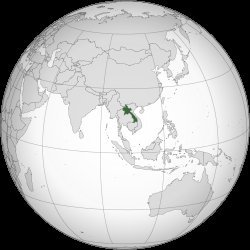
REEx Insight: China’s Fortress Has a Feedstock Door
China controls the refinery, but not every shovel of ore entering it. Chinese processors increasingly rely on ion-adsorption deposits in Laos and Myanmar for dysprosium and terbium—elements needed in high-temperature neodymium-iron-boron magnets. That dependency does not end China’s dominance. It reveals where the dominance can fracture. A prolonged Laotian shutdown, combined with instability in Myanmar, could tighten heavy rare earth feedstock, increase Chinese domestic prices, and further widen the price premium confronting Western magnet producers.
A Suspension Wrapped in Fog
Nikkei Asia reported that the operation stopped to ensure compliance with law. Laos had already acknowledged poorly managed extraction, illegal mineral transport, and environmental damage. Provincial approvals have reportedly collided with national enforcement following pollution complaints. [Nikkei Asia (opens in a new tab), New Security Beat (opens in a new tab)]
Investors should resist reading one suspension as a supply shock. No verified production volume, grade profile, reserve estimate, or restart timetable has been publicly established. The stronger conclusion is structural: opaque mines, weak oversight, and community conflict underpin part of China’s supposedly invulnerable supply chain. This is not proof that China is losing control. It is evidence that its control carries hidden geological, political, and environmental liabilities.
REEx Laos Summary
Laos is emerging as a strategically important but poorly documented source of heavy rare earth elements, particularly dysprosium and terbium used in high-performance permanent magnets. Northern provinces including Houaphanh and Xiangkhouang contain promising ion-adsorption clay geology, with reported exchangeable rare earth concentrations of roughly 400–700 parts per million. Chinese capital dominates exploration and extraction, while Laos has little domestic separation, refining, or magnet capacity. Projects tied to Chifeng Jilong Gold Mining, Xiamen Tungsten, Laos-China Rare Mineral Development Company North 2, and other Chinese-backed operators effectively extend China’s upstream supply network beyond its borders. Laos may therefore help Beijing diversify feedstock away from unstable Myanmar without weakening China’s grip on the profitable midstream and downstream stages. REEx sector analysis and corporate mapping.
The opportunity comes with severe technical, regulatory, and environmental uncertainty. Laos lacks a comprehensive rare earth strategy, transparent mine-level reporting, and robust environmental enforcement; most deposits remain inadequately defined by compliant resource estimates, grades, recoveries, and production data. Ion-adsorption mining can release ammonium compounds, dissolved metals, and potentially radioactive material into groundwater and river systems. A 2024 discharge in Houaphanh reportedly polluted the Van and Xam rivers, killed fish, and affected 36 villages—raising fears that Laos could repeat Myanmar’s destructive extraction model.
REEx’s conclusion is blunt: Laos possesses credible heavy rare earth potential, but investors should not mistake geological promise for a bankable, responsible supply chain. Unless governance, disclosure, and domestic value capture improve, Laos risks keeping the pollution while China keeps the processing power, margins, and strategic leverage. REEx Mekong analysis.
REEx Connect
Lao Government and Regulatory Bodies
- Lao Ministry of Industry and Commerce: Principal national institution overseeing mining policy, permitting, and compliance. Its Department of Geology and Mines has led environmental-management discussions and promoted investment in the mineral sector. Ministry website (opens in a new tab)
- Department of Geology and Mines: Mining regulator within the Ministry of Industry and Commerce; responsible for geological oversight, mineral licensing, and regulatory enforcement.
- Malaythong Kommasith: Lao Minister of Industry and Commerce associated with the government’s mining-policy and investment initiatives.
- Lao Ministry of Energy and Mines: Government institution involved in mineral and energy-sector policy.
- Lao Ministry of Public Works and Transport: Oversees infrastructure and logistics corridors supporting mining and cross-border trade. Ministry website (opens in a new tab)
- Leklai Sivilay: Minister of Public Works and Transport; met representatives from 12 Chinese infrastructure, energy, and mining companies in April 2026.
- Sonexay Siphandone: Prime Minister of Laos; pursuing foreign-investment diversification while maintaining close economic relations with China.
- Thongloun Sisoulith: President of Laos and General Secretary of the Lao People’s Revolutionary Party.
- Kongkeo Xaysongkham: Vice President of the Lao National Assembly; participated in the June 2026 national dialogue on sustainable mining governance.
- Houaphanh provincial and Xam Neua district authorities: Conducted inspections and addressed community complaints connected with rare earth mining and river contamination.
- Xiangkhouang provincial and Phaxay district authorities: Local authorities associated with rare earth concessions, land use, and compensation disputes.
- Lao News Agency: State news organization reporting on sustainable mining governance, environmental monitoring, and enforcement activity.
Chinese Companies and Lao Operations
- Tong Lee Seung Industrial Development Company: Chinese company approved in 2022 to explore or excavate rare earths across three square kilometers in Phaxay district, with another 25 square kilometers identified for exploration. Its connection to the newly suspended operation has not been confirmed. Background (opens in a new tab)
- Laos-China Rare Mineral Development Company North 2 Ltd.: Chinese-controlled operator associated with a reported 500-hectare concession within a larger 198-square-kilometer project in Houaphanh Province. The company was linked to the February 2024 wastewater incident affecting the Van and Xam rivers and 36 villages.
- Chifeng Jilong Gold Mining Company: Chinese mining group whose joint venture expanded into Lao medium and heavy rare earth resources.
- Xiamen Tungsten Company: Chinese state-backed tungsten and rare earth producer partnering with Chifeng Jilong in Laos. REEx profile
- Shanghai Chijin Xiawu Metal Resources Company: Joint venture owned 51% by Chifeng Gold and 49% by Xiamen Tungsten; established to develop gold and rare earth assets in Laos.
- CHIXIA Laos Holdings: Lao investment vehicle through which the Chinese partners acquired 90% of China Investment Mining Laos Sole Company.
- China Investment Mining Laos Sole Company: Corporate vehicle controlling interests in rare earth exploration, experimental mining, and processing licenses in Xiangkhouang Province.
- China Investment Rare Earth Mining Company: Lao rare earth operating interest within the China Investment Mining ownership structure.
- China Investment Rare Earth Mining Xiangkhouang Company: Project company associated with rare earth rights in Xiangkhouang Province.
- Mengkang/Meng Khun rare earth project: Xiangkhouang project reported to target approximately 3,675 tonnes of mixed rare earth oxides annually from stated reserves exceeding 15,000 tonnes; these figures require continuing technical and operational verification.
- Zhao Qiang: Identified in corporate records as head of CHIXIA Laos.
- Fu Xusheng: Identified as legal representative of Shanghai Chijin Xiawu Metal Resources.
- Dai Jianliang: Identified as head of CI Properties.
- Chen Yonghai: Identified as legal representative of China Investment Mining Laos.
- China Inorganic Salts Industry Association: Chinese industry organization that joined Lao authorities in a May 2026 seminar on controlling mining-related environmental impacts.
Research, Environmental and Regional Organizations
- National University of Laos: Lao academic institution examining the country’s rare earth investment, governance, and economic-development prospects. University website (opens in a new tab)
- Phouphet Kyophilavong: National University of Laos researcher and lead contributor to the 2026 policy study on promoting investment in Laos’s rare earth supply chain. Research profile
- Economic Research Institute for ASEAN and East Asia (ERIA): Regional policy institution contributing research on Laos’s rare earth sector and economic development. ERIA (opens in a new tab)
- Han Phoumin: ERIA researcher and collaborator on the Laos rare earth investment study. Profile (opens in a new tab)
- Lü Liang: Lead author of 2022 geological research identifying ion-adsorption rare earth potential in northern Laos.
- Yakang Ye: Lead researcher on a 2025 study combining satellite imagery, terrain analysis, and fieldwork to identify six prospective zones in Houaphanh Province. Study (opens in a new tab)
- Mingjun Xie: Lead author of a 2026 mineralogical study examining heavy rare earth enrichment at the Meng Khun deposit.
- Stimson Center: Research organization using satellite analysis to track mining expansion and environmental risks across the Mekong basin. Its work identified 26 monitored sites in Laos and 77 rare earth mines draining into the broader Mekong system. Research (opens in a new tab)
- Regan Kwan: Stimson Center researcher associated with satellite-based monitoring of mining activity in Laos.
- Mekong River Commission: Intergovernmental body supporting cross-border water-quality monitoring, including intensified work in Bokeo and Luang Prabang.
- World Wide Fund for Nature–Laos: Participant in Lao discussions concerning mining governance, environmental protection, and river integrity.
- National Institute for Economic and Social Sciences: Lao research institution participating in the June 2026 sustainable-mining dialogue.
- Shan Human Rights Foundation: Nongovernmental organization using local evidence and satellite imagery to examine Chinese-linked rare earth activity and pollution risks in the region.
International and Strategic Participants
- Government of Japan: Emerging potential counterweight to Chinese economic dominance through infrastructure, energy-security, and critical-minerals engagement with Laos.
- Partnership on Wide Energy and Resources Resilience Asia: Japanese initiative intended to finance energy security and more resilient Asian supply chains.
- Japan Bank for International Cooperation: Japanese public financial institution positioned to support regional energy and infrastructure investment.
- Nippon Export and Investment Insurance: Japanese export-credit institution supporting overseas investment and supply-chain resilience.
- United States Embassy in Laos: U.S. diplomatic mission monitoring governance, investment, and regional supply-chain issues. Embassy (opens in a new tab)
- Michelle Y. Outlaw: Chargée d’Affaires ad interim at the U.S. Embassy in Laos as of the cited REEx reporting.
- Forum on Resource Geostrategic Engagement: U.S.-led international framework for critical-minerals cooperation and supply-chain resilience.
- Nikkei Asia / Kenji Kawase: Source of the August 11, 2026 report concerning the suspended Chinese rare earth operation in Laos. Original reporting | Reader support (opens in a new tab)
- Radio Free Asia: Reporting source on Lao mining concessions, community compensation, and the 2024 Houaphanh pollution incident. Laos coverage (opens in a new tab)


0 Comments
No replies yet
Loading new replies...
Moderator
Join the full discussion at the Rare Earth Exchanges Forum →