
Highlights
- Xenotime naturally concentrates high-value heavy rare earths like dysprosium and terbium within a stable phosphate crystal lattice, making it strategically critical for magnets and defense.
- Key deposits at Browns Range in Australia and Lofdal in Namibia represent rare non-Chinese sources of heavy rare earth supply focused on xenotime mineralization.
- Unlike ion-adsorption clays, xenotime requires complex processing including fine grinding, chemical cracking, and extensive solvent extraction, limiting its current production share.
- No authoritative global dataset tracks heavy rare earth production by host mineral, leaving investors with a significant blind spot in supply chain intelligence.
- Xenotime is unlikely to replace Chinese ionic clay production in volume but could become the cornerstone of a diversified Western heavy rare earth supply chain.
The world's heavy rare earth supply is dominated by one geological phenomenon: ion-adsorption clays. More than 90% of primary heavy rare earth elements (HREEs)—including the magnet-critical metals dysprosium (Dy) and terbium (Tb)—originate from weathered clay deposits in southern China and similar deposits in Myanmar, with Brazil emerging as the first significant producer outside Asia. Yet beneath that overwhelming dominance lies another mineral of enormous strategic importance: xenotime.
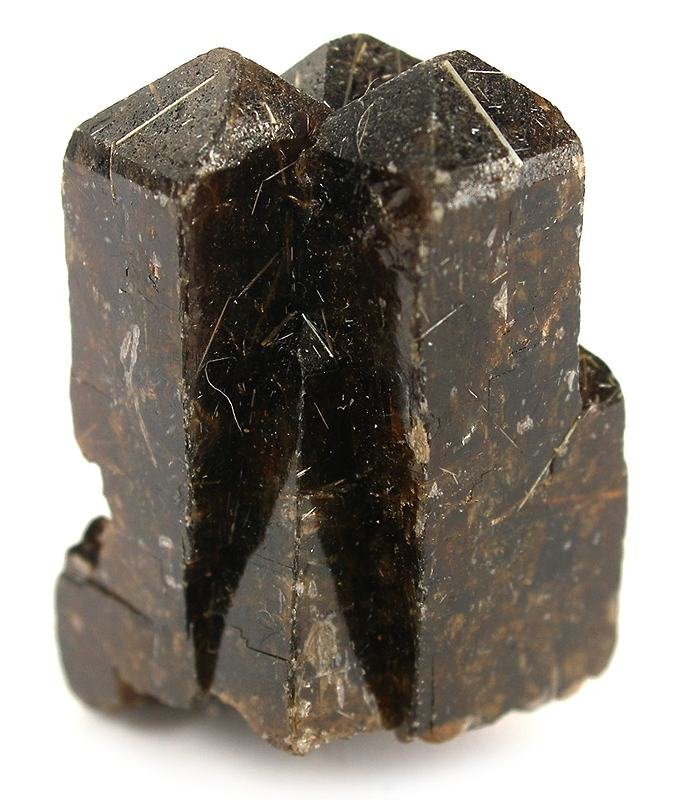
Unlike ion-adsorption clays, xenotime is a hard-rock phosphate mineral that naturally concentrates many of the world's highest-value heavy rare earths. It will almost certainly never match ionic clays in production volume, but it may represent the West's best opportunity to develop a diversified, non-Chinese supply of dysprosium and terbium.
Nature's Heavy Rare Earth Concentrator
Xenotime-(Y) is yttrium phosphate (YPO₄), a dense tetragonal mineral structurally related to zircon. Within its crystal lattice, yttrium is readily substituted by heavy rare earths including dysprosium, erbium, ytterbium, and holmium. Unlike bastnäsite or monazite, xenotime is naturally enriched in the heavy rare earth elements most critical for high-temperature permanent magnets, advanced electronics, lasers, and defense systems.
The mineral typically forms in highly evolved granites, NYF pegmatites, alkaline igneous complexes, hydrothermal veins, and carbonatite-related systems. It commonly occurs alongside zircon, monazite, apatite, cassiterite, niobium-tantalum minerals, and titanium-bearing heavy minerals. Because xenotime is exceptionally dense and chemically resistant, weathering often concentrates it into alluvial and coastal placer deposits, particularly those associated with historic tin mining.
Where Xenotime Matters
Several deposits illustrate xenotime's strategic potential.
Browns Range in Western Australia is widely regarded as one of the world's premier dysprosium-terbium deposits. Its hydrothermal xenotime mineralization is unusually rich in heavy rare earths and remains among the few advanced projects focused specifically on Dy and Tb production. Lofdal in Namibia represents another globally significant opportunity. Approximately 90% of the deposit's heavy rare earth inventory occurs within xenotime, simplifying mineral deportment despite relatively modest overall grades.
Brazil's Pitinga mine demonstrates a different model. Xenotime occurs as a by-product within one of the world's great tin-niobium-tantalum districts, while Malaysia's historic amang (tin tailings) industry has recovered xenotime concentrates for decades. Similar opportunities exist in Indonesia's Bangka-Belitung tin province, where rare earth-bearing minerals remain associated with cassiterite processing.
Why Xenotime Remains Challenging
Geology is only part of the story. Unlike ion-adsorption clays, where rare earth ions are weakly attached to clay surfaces and can often be recovered through relatively simple leaching, xenotime locks rare earths inside a highly stable phosphate crystal lattice. Recovering those metals requires crushing, fine grinding, gravity and flotation concentration, chemical cracking using caustic soda or sulfuric acid, uranium-thorium management, and finally dozens—sometimes hundreds—of solvent extraction stages before individual rare earth oxides emerge.
These technical challenges explain why xenotime contributes only a small and largely unreported share of global heavy rare earth production despite its exceptional mineralogy.
The Strategic Opportunity
Xenotime's value is not that it will replace ionic-clay production—it almost certainly will not. Instead, it offers one of the very few commercially credible hard-rock pathways toward a diversified heavy rare earth supply chain outside China.
Projects such as Browns Range and Lofdal could become meaningful non-Chinese sources of dysprosium and terbium concentrates, while Australia's Eneabba Rare Earths Refinery is being constructed initially to process Iluka's monazite-rich stockpiles but is also designed with the flexibility to accept compatible third-party concentrates, including xenotime-bearing feeds.
Perhaps the industry's biggest blind spot is surprisingly basic: no authoritative global dataset reports heavy rare earth production by host mineral. Investors therefore understand the geology far better than they understand actual supply.
As governments race to secure critical minerals for electric vehicles, wind turbines, and defense systems, xenotime is emerging as one of the most strategically important minerals few investors know well. It is unlikely to rival ionic clays in scale, but it could someday become the cornerstone of the West's effort to build an independent heavy rare earth supply chain—one crystal at a time.


0 Comments
No replies yet
Loading new replies...
Moderator
Join the full discussion at the Rare Earth Exchanges Forum →