
Highlights
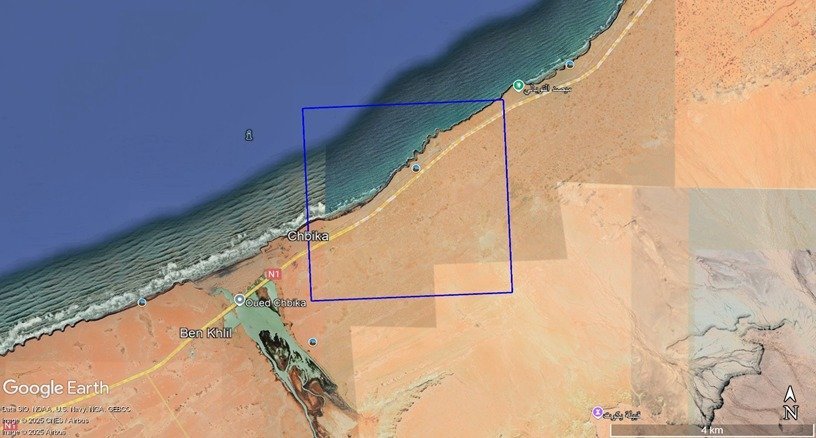
- Steadright Critical Minerals (CSE: SCM) received a Moroccan mining license for its 16-square-kilometer TitanBeach Titanium Beach One project via 76.5%-owned NSM Capital.
- A mining license is a permitting milestone, not a proven deposit—resource estimates, metallurgy, recoveries, and economics have yet to be disclosed.
- China controls roughly 67% of global titanium sponge production, making allied feedstock sources like Morocco strategically significant if TitanBeach proves economic.
- The U.S. produced zero titanium sponge in 2025, relying on imports from Japan, Kazakhstan, and Saudi Arabia, underscoring supply chain vulnerability.
- Steadright remains a speculative junior; investors should await hard data on grade, mineralogy, processing routes, capex, and project economics before drawing conclusions.
Titanium rarely attracts rare earth headlines, but modern aerospace cannot fly without it. Steadright Critical Minerals (opens in a new tab) (CSE: SCM) says Moroccan authorities have granted a mining license covering approximately 16 square kilometers of its TitanBeach Titanium Beach One (opens in a new tab) project through 76.5%-owned NSM Capital. It is a meaningful permitting milestone—but investors should distinguish a mining license from a demonstrated economic deposit. Steadright has not yet presented the resource, metallurgy, recoveries, or economics necessary to establish TitanBeach as a viable titanium mine.
REEx Insight | The Ore Is Only the Opening Act
Titanium illustrates the same lesson REEx repeatedly finds in rare earths: mining is not the supply chain.
Ilmenite and rutile feed overwhelmingly into titanium dioxide (TiO₂); in the U.S., more than 95% of titanium mineral concentrates go to pigment used primarily in paints, plastics, and paper. A smaller but strategically crucial stream becomes titanium metal for aircraft, spacecraft, armor, chemical processing, and medical implants.
China is the leading titanium-mineral producer, followed by major producers including Mozambique and South Africa. But the strategic choke point moves downstream: China accounted for roughly 67% of global titanium sponge production in 2024, followed by Japan and Russia among major producers.
Morocco Gets a Ticket—Not Yet a Mine
Steadright says Beach One covers roughly four kilometers by four kilometers. That matters, but acreage proves little.
Investors now need the harder numbers: mineral resource, ilmenite/rutile grade, mineralogy, impurities, recoveries, concentrate specifications, processing route, capex, and economics. Until those arrive, claims of "significant scale" remain promotional rather than demonstrated.
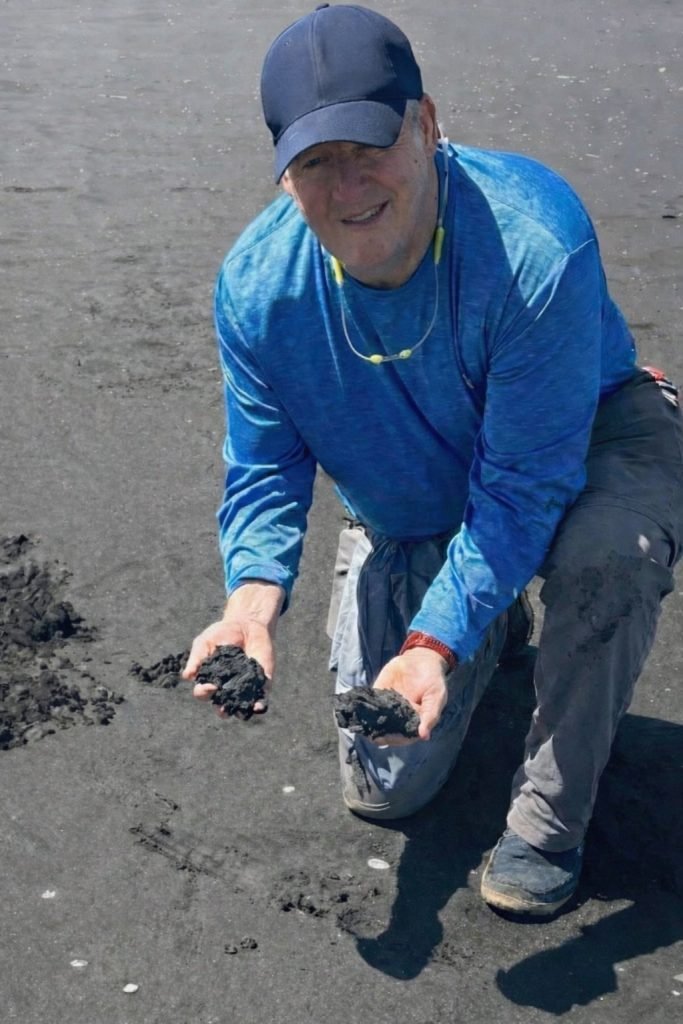
The opportunity is nevertheless worth watching. The U.S. produced no titanium sponge in 2025 and imported heavily from Japan, Kazakhstan, and Saudi Arabia. If TitanBeach ultimately proves economic, Morocco could offer another allied feedstock source. But between sand and a fighter-aircraft component lies an unforgiving industrial chain.
Profile
Steadright Critical Minerals Inc. (CSE: SCM | OTC: SCMNF) is a Canadian junior mineral exploration and development company founded in 2019 and headquartered in Huntsville, Ontario, increasingly focused on advancing critical-mineral and polymetallic assets in Morocco. Its Moroccan portfolio includes the permitted historic Goundafa polymetallic mine, the Copper Valley copper-lead-silver project, the TitanBeach heavy-mineral-sands project covering more than 192 square kilometers, and the prospective SilverLine asset, alongside legacy nickel, copper, cobalt, PGE, and silica properties in Canada.
Steadright's strategy is to move beyond early-stage exploration toward permitted or historically productive Moroccan assets offering potential nearer-term development and cash flow. However, the company remains a speculative junior whose success depends on confirming economic resources, securing financing, executing development plans, and ultimately demonstrating commercially viable production.


0 Comments
No replies yet
Loading new replies...
Moderator
Join the full discussion at the Rare Earth Exchanges Forum →