
Highlights
- Carester combines decades of Rhône-Poulenc, Rhodia, and Solvay solvent-extraction expertise with CEA's PAREX+ simulation platform to tackle the West's rare-earth separation bottleneck.
- Subsidiary Caremag targets 800 tonnes/year of NdPr and 600 tonnes/year of Dy/Tb oxides—potentially making it the largest Western producer of separated heavy rare earths by late 2026.
- A €216 million financing package includes Japanese partners JOGMEC and Iwatani securing 50% of heavy rare-earth output, plus a binding 10-year Stellantis offtake agreement.
- USA Rare Earth and InfraVia are each targeting approximately 13.6% ownership stakes, with SEC filings confirming Solvay as an existing shareholder scheduled to exit at closing.
- Carester sits at the chokepoint of the Western supply chain where upstream mining tonnes must be converted into qualified magnet-grade oxides—a capability China currently dominates.
Carester SAS (opens in a new tab) is a Lyon-based rare-earth process-engineering company founded in 2019 by Frédéric Carencotte with veteran separation specialists, most drawn from the Rhône-Poulenc/Rhodia/Solvay lineage. (opens in a new tab) It is evolving from a consultancy and intellectual property (IP) house into an oxide producer through subsidiary Caremag. The lineage is predominantly French industrial chemistry, while its key digital platform, Parex+, derives from the French Alternative Energies and Atomic Energy Commission (opens in a new tab)) or CEA and Orano SA (opens in a new tab) (Orano) nuclear-separation program. Carester's validation now includes €216 million of Caremag financing and definitive agreements under which USA Rare Earth and InfraVia would each own approximately 13.6%—with Securities and Exchange Commission filings revealing that Solvay itself is an existing Carester shareholder (opens in a new tab) scheduled to exit.
Why Might This Be the Most Important Company in the West
Carester may prove to be one of the most strategically important companies in the Western rare-earth ecosystem because separation—not only mining—is the real bottleneck. The West can finance mines, produce concentrates, and even build magnet plants, but none of that matters at scale without the ability to separate chemically similar rare-earth elements into high-purity oxides, particularly the heavy rare earths dysprosium and terbium needed for high-performance magnets.
Carester brings together something exceptionally scarce: decades of Rhône-Poulenc, Rhodia, and Solvay solvent-extraction know-how, proprietary process development, CEA-derived PAREX+ modeling capabilities, and an industrial pathway through Caremag. Its planned output of NdPr, Dy, and Tb places it directly in the hardest part of the mine-to-magnet chain. That explains why USA Rare Earth, InfraVia, JOGMEC, Iwatani, Stellantis, and others have gravitated toward the company. Several other companies have retained or plan to retain the French firm.
In a Western supply chain crowded with ambitious mining projects, Carester sits at the chokepoint that determines whether those upstream tonnes can actually become qualified magnet material.
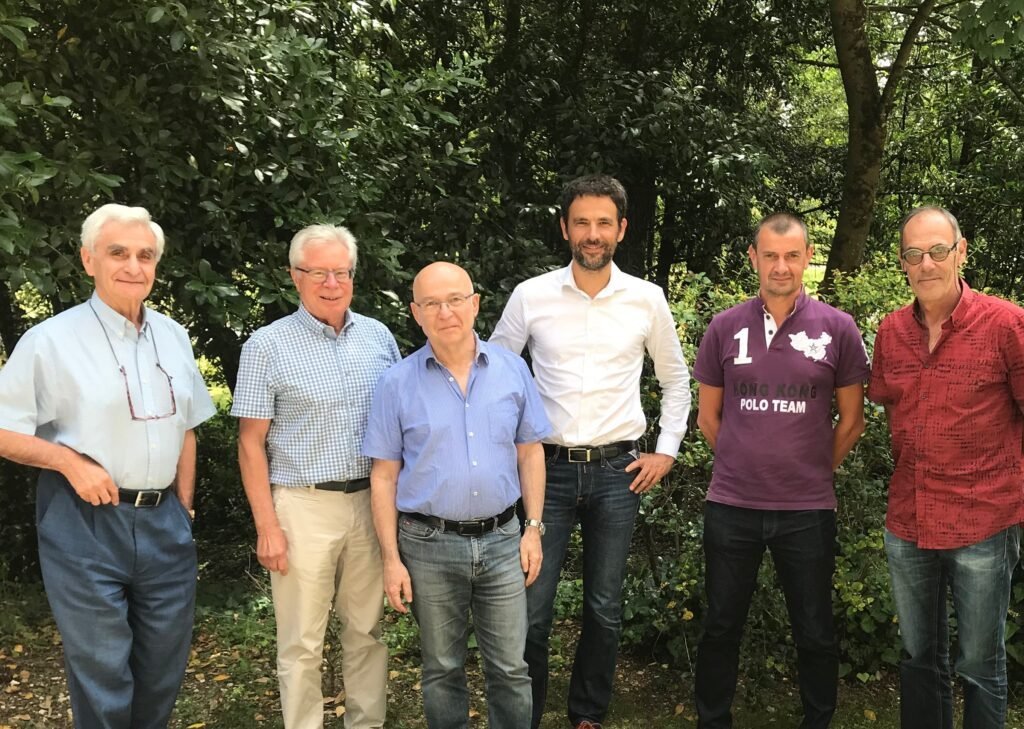
Carester Founding Team
Source: Carester
Company, Technology and Technical Origin
Carester states it was founded in 2019; French corporate databases variously place creation on January 24 or February 1, 2019. Caremag followed in November 2020, and in 2021 Carester transferred to it a €500,000 business branch (opens in a new tab) covering magnet-recycling processes and production of pure rare-earth oxides.
Technically, Carester combines hydrometallurgy/pyrometallurgy with industrial liquid-liquid solvent extraction. As reported by the company (opens in a new tab), its differentiation lies in flowsheet design, radioactivity removal, simulation, and extraction-battery automation rather than an entirely new separation mechanism.
In 2020, CEA granted Carester worldwide exclusivity (opens in a new tab) in rare-earth applications for Parex+, under a 12-year R&D/license agreement extendable eight years. CEA explicitly says Parex+ was developed from the 1980s with Orano for modeling uranium/plutonium solvent extraction.
The patent record (opens in a new tab) reinforces that French/Western provenance. Carester's 2023-priority heavy-REE family uses consecutive anionic- then cationic-solvent-extraction stages; newer families address actinium removal, while a 2025 filing concerns ionic-clay upgrading. A multilingual provenance search found no Russian Carester inventor, assignee, licensor, or prior employer.
Principals and IP Provenance
| Principal / role | Prior background | Notable patents/publications |
|---|---|---|
| Frédéric Carencotte, (opens in a new tab) President/founder | 20 years Rhône-Poulenc/Rhodia/Solvay; 15 in REs, France/China | Former Rhodia Rare Earth Systems industrial director; no Carester patent identified under his name |
| Alain Lévêque, (opens in a new tab) PhD, R&D expert | 35 years Rhône-Poulenc/Rhodia; 1973 RE-separation thesis | Carester actinium families; legacy Rhône-Poulenc RE/actinide extraction patents; encyclopedia reviews; ~25 patents |
| Alain Rollat (opens in a new tab), consultant | Rhône-Poulenc/Rhodia/Solvay research and plants | Carester heavy-REE/actinium patents; legacy Rhône-Poulenc separation IP; coauthor of Rare Earths; 2016 peer-reviewed RE-flow paper |
| Thierry Delloye (opens in a new tab), PhD, process expert | Rhône-Poulenc/Rhodia/Solvay; La Rochelle hydrometallurgy | >10 patents; EP0284504, rare-earth liquid-liquid extraction, Rhône-Poulenc |
| Pascal Rault (opens in a new tab) / Alain Van De Sype, process experts | La Rochelle and China extraction operations/technology transfer | Deep operating know-how; no Carester patents identified in reviewed families |
| Jean-Paul Tognet (opens in a new tab) / Gabriel Vilmin (opens in a new tab), process/project experts | Rhône-Poulenc/Rhodia/Solvay | Tognet: mining-process patents; Vilmin: nine patents, including legacy Rhône-Poulenc/Rhodia work |
Capital, Customers and Industrial Footprint
Caremag is designed to process 2,000 tonnes per year of end-of-life magnets and 5,000 tonnes of mining concentrates, producing approximately 800 tonnes per year of neodymium-praseodymium (NdPr) oxides and 600 tonnes of combined dysprosium-terbium (Dy/Tb) oxides. Carester says that Dy/Tb volume would represent roughly 15% of current global production, potentially making Caremag the largest Western producer of separated heavy rare earths when operations begin, currently targeted for late 2026.
The project's €216 million financing package includes up to €110 million in equity and shareholder loans from JOGMEC and Iwatani, through Japan France Rare Earths Co., alongside €106 million of French government support through France Relance, France 2030, repayable advances, and France's Green Industry tax credit. Critically, the Japanese financing comes with a long-term agreement securing 50% of Caremag's heavy rare-earth production for Japan. Carester has also secured substantial commercial validation: Stellantis signed a binding 10-year offtake agreement for more than 3,400 tonnes of Nd, Pr, Dy, and Tb oxides, with 36% sourced from recycling. The company additionally has a strategic MOU with Solvay, designed to link Caremag with Solvay's established La Rochelle rare-earth operations, while its broader feedstock strategy includes a long-term relationship with Torngat Metals.
Taken together, Caremag is more than another proposed Western rare-earth plant: if it reaches nameplate capacity, it would establish meaningful non-Chinese industrial-scale separation capacity precisely where the Western supply chain remains most vulnerable—heavy rare earths.
The USA Rare Earth connection is unusually deep. July 2026 SEC filings show USAR and InfraVia targeting approximately 13.6% each. USAR's total economic outlay is about €40 million: €22.5 million invested into Carester plus roughly €5 million of founder shares and €12.5 million of shares from Rhodia Opérations. Most significantly, the filing identifies Rhodia as the vehicle through which Solvay owns its Carester interest; closing requires Solvay's full exit. USAR receives oxide offtake and access to Carester engineering/IP; Carester gains feedstock access from Serra Verde and Round Top.
Market Position and Unresolved Gaps
Carester's footprint comprises Lyon headquarters, Villeurbanne laboratories, a Vénissieux magnet-dismantling center, and Caremag at Lacq; Caremag is scheduled for late-2026/Q4 commissioning. Its strategic position is therefore unusual: a concentrated repository of legacy European solvent-extraction expertise becoming a Western heavy-REE producer. But as of August 9, 2026, Caremag remains pre-commercial and the USAR/InfraVia investment had not been publicly announced as closed. The exact origin date/terms of Solvay's equity stake remain undisclosed.
Did You Know
A key tool supporting its separation work is PAREX+, a sophisticated process-modeling and simulation platform developed by France's CEA with Orano, originally for modeling solvent extraction in the nuclear-fuel cycle. Carester obtained exclusive worldwide rights to apply PAREX+ to rare-earth separation, allowing its engineers to simulate and optimize large, multi-stage extraction circuits before and during industrial deployment—potentially reducing development time, chemical consumption, and operating risk in one of the rare-earth supply chain's most technically difficult steps.
Sources
- Carester — Our Company and leadership biographies (opens in a new tab)
- Carester — Caremag €216 million financing announcement (opens in a new tab)
- Carester — Caremag plant and industrial strategy (opens in a new tab)
- Carester — Services and rare-earth process expertise (opens in a new tab)
- CEA — Carester partnership and PAREX+ technology origins (opens in a new tab)
- CEA/HAL — PAREX code development and solvent-extraction simulation (opens in a new tab)
- Google Patents — Carester heavy rare-earth separation patent FR3148426A1 (opens in a new tab)
- Google Patents — Rhône-Poulenc rare-earth liquid-liquid extraction patent EP0284504A1, Thierry Delloye (opens in a new tab)
- Google Patents — Rhône-Poulenc rare-earth/uranium/thorium extraction patent US4461748A, Alain Lévêque (opens in a new tab)
- PubMed — Alain Rollat et al., rare-earth flows in Europe (opens in a new tab)
- French Senate — Frédéric Carencotte testimony as Industrial Director, Rhodia Rare Earth Systems (opens in a new tab)
- Annales des Mines — Frédéric Carencotte biography and founding of Carester (opens in a new tab)
- French Government Company Directory — Carester corporate record (opens in a new tab)
- Pappers — Carester corporate filings and accounts (opens in a new tab)
- USA Rare Earth — Carester investment and strategic partnership, April 2026 (opens in a new tab)
- SEC — USA Rare Earth July 2026 Form 8-K detailing Carester transaction (opens in a new tab)
- SEC — USA Rare Earth definitive Carester agreement announcement (opens in a new tab)
- Reuters — USA Rare Earth agreement to acquire 13.6% of Carester
- Reuters — USA Rare Earth/Carester strategic partnership and proposed French magnet plant (opens in a new tab)
- JOGMEC — Equity and debt financing for Caremag (opens in a new tab)
- Iwatani — Caremag investment and Japanese heavy rare-earth supply agreement (opens in a new tab)
- Solvay — Solvay-Carester strategic partnership (opens in a new tab)
- Carester — Stellantis long-term rare-earth oxide supply agreement (opens in a new tab)
- Torngat Metals — Carester/Caremag heavy rare-earth feed agreement (opens in a new tab)
- Energy Fuels — Engagement of Carester for rare-earth separation engineering work (opens in a new tab)
- Chemical & Engineering News — USA Rare Earth and Carester partnership (opens in a new tab)
- Chemical & Engineering News — Solvay and Carester rare-earth partnership (opens in a new tab)
- EIT RawMaterials — Rare Earth Magnets and Motors: A European Call for Action (opens in a new tab)
- REE-FLEX — Carester/KU Leuven next-generation solvent-extraction project (opens in a new tab)
- L'Usine Nouvelle — Carester and CEA rare-earth separation simulation work
- Mining Technology — Caremag project profile (opens in a new tab)


0 Comments
No replies yet
Loading new replies...
Moderator
Join the full discussion at the Rare Earth Exchanges Forum →